In the history of American innovation, few figures illustrate the gap between mechanical genius and business skill as clearly as Walter Hunt. In the spring of 1849, Hunt found himself burdened by a debt of fifteen dollars owed to a draftsman. Seeking a quick solution to this financial obligation, he turned his attention to a scrap of brass wire.
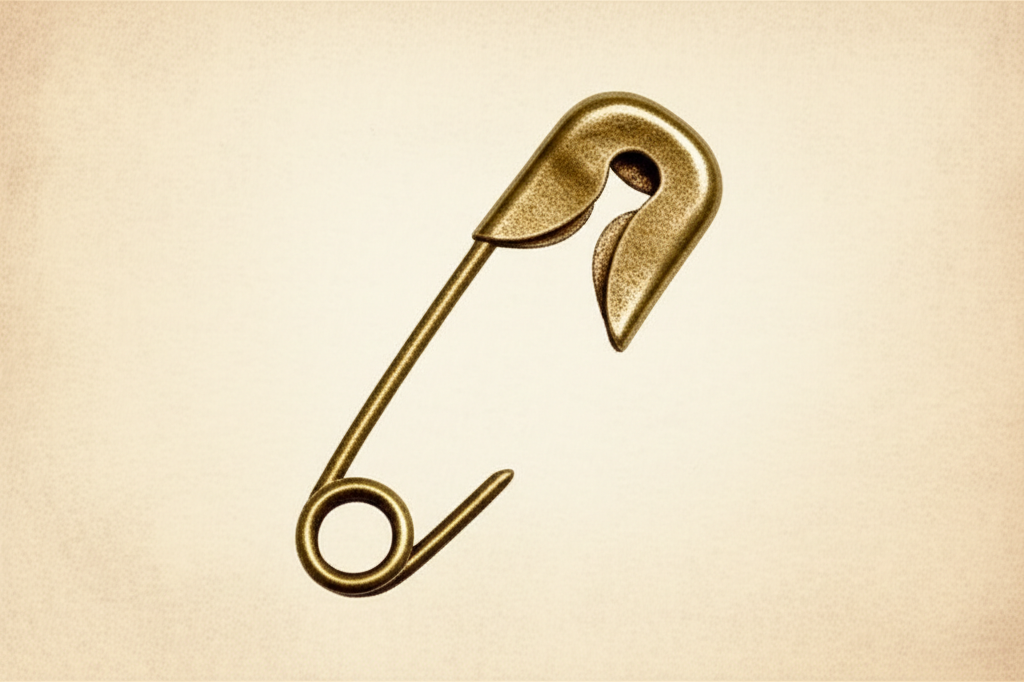
Within a span of merely three hours, Hunt twisted the wire into a single, continuous unit. The resulting design featured a coiled spring at the bottom and, crucially, a guarded clasp at the top to shield the sharp point. While ancient cultures had used open pins, Hunt’s modification introduced a safety catch that prevented injury and kept the fastener secure. On April 10, 1849, he secured U.S. Patent No. 6,281 for the device, which was originally titled the “dress pin.”
Driven by immediate need rather than long-term planning, Hunt sold the full rights to his creation for four hundred dollars. This exchange allowed him to pay his creditor and keep the remainder, yet it stripped him of ownership over an invention destined for universal use. The firm that acquired the patent eventually generated vast wealth from the design, highlighting a consistent pattern in Hunt’s career: he possessed the intellect to solve mechanical problems but lacked the desire to maximize their value in the marketplace.