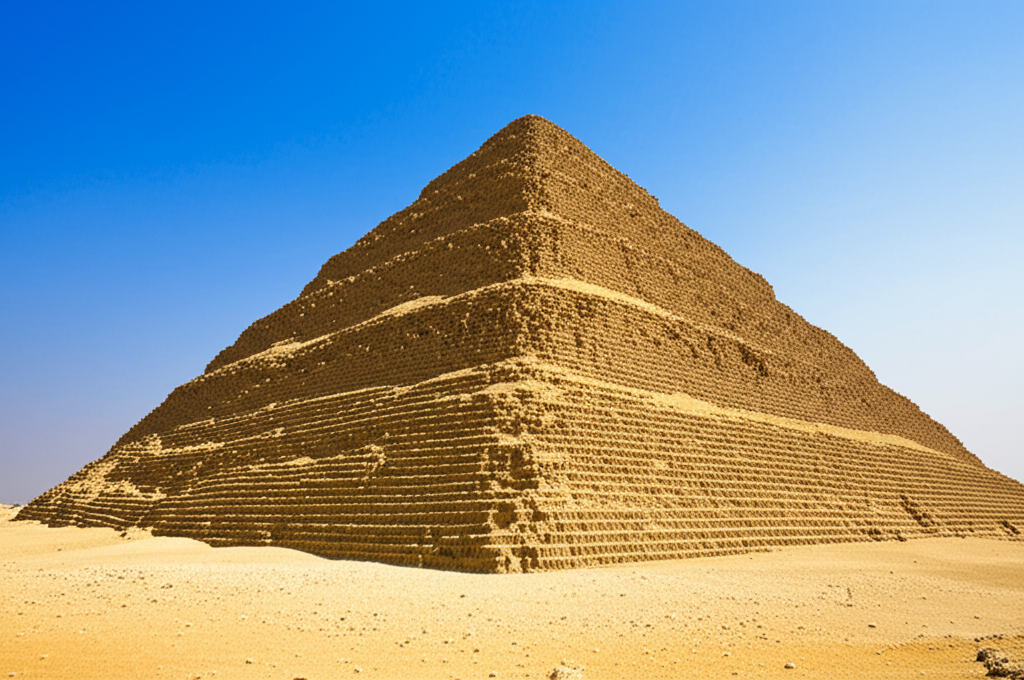
The construction of the Step Pyramid at Saqqara marked a definitive departure from the architectural norms of the Early Dynastic Period. Orchestrated by the royal vizier Imhotep during the Third Dynasty, the project transformed the traditional rectangular tomb into a structure of unprecedented verticality. Rather than utilizing the standard sun-dried mudbrick, the builders committed to hewn stone, a decision that necessitated rigorous calculations regarding load-bearing limits and long-term material durability.
The engineering strategy relied on an iterative process of expansion. The structure commenced as a traditional square mastaba, which was subsequently enlarged and surmounted by five additional layers of diminishing size. To ensure stability, the masons employed a technique known as accretion layers, where rough-hewn blocks were set at an inward incline. This centripetal orientation directed the immense pressure of the stone toward the pyramid’s core, effectively counteracting the lateral forces that threatened to destabilize the rising monument.
Beneath the visible superstructure, the engineers excavated a vast subterranean labyrinth. This complex network of tunnels and galleries required precise reinforcement to prevent collapse under the mounting weight of the stone tiers above. The successful completion of the Saqqara complex demonstrated that limestone could be manipulated on a monumental scale, establishing the structural and logistical foundations that would later enable the architectural refinements of the Fourth Dynasty and the true pyramids at Giza.