
Prior to the mid-19th century, chemical experimentation was frequently hindered by unreliable and inconsistent heat sources. Laboratories relied on spirit lamps and open fires, which produced sooty, unpredictable flames. This variability made precise temperature control an elusive goal, introducing a significant obstacle to the replication of experimental results. Without a uniform method of heating, the outcomes of delicate procedures could differ substantially from one laboratory to another, impeding the systematic advancement of chemical science.
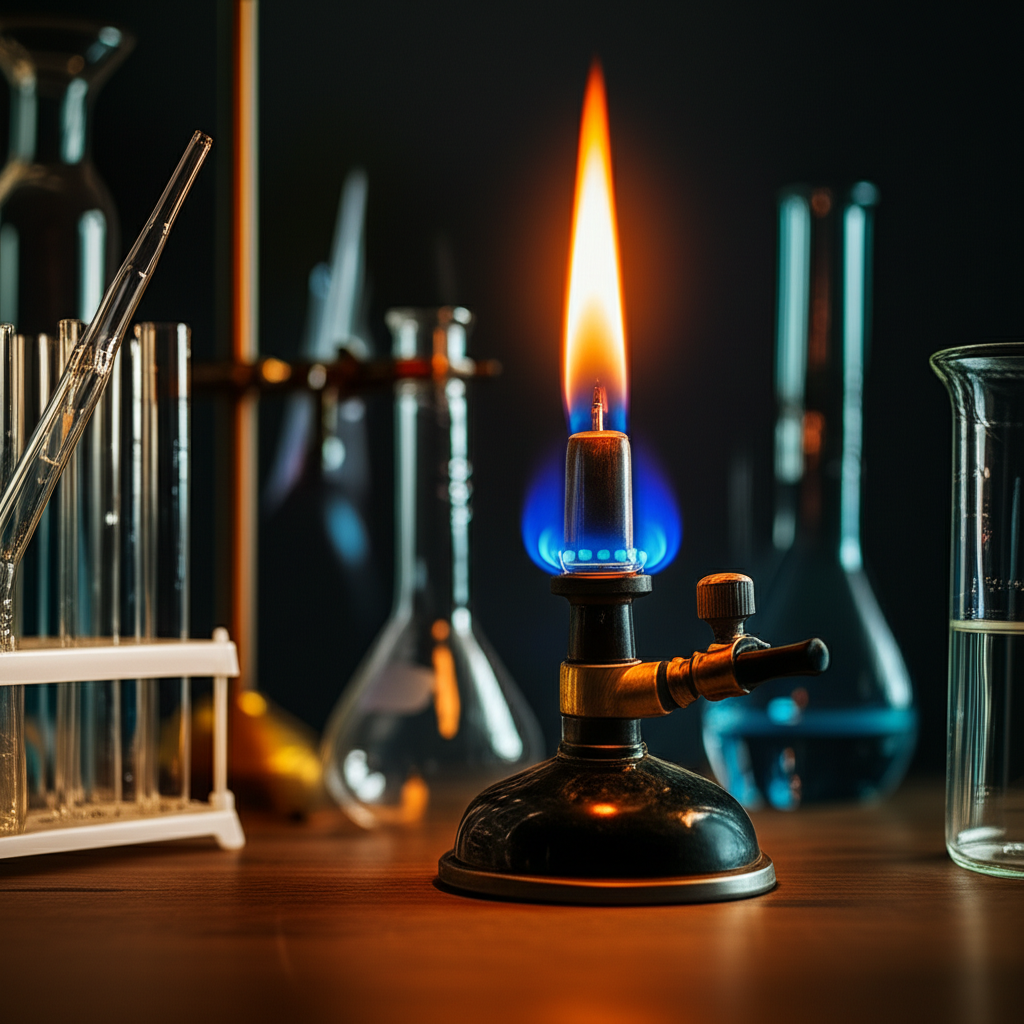
The introduction of the Bunsen burner around 1855, a device perfected by Robert Bunsen and his technician Peter Desaga, represented a paradigm shift. Its critical innovation was an adjustable collar at the base that controlled the mixture of gas and air before combustion. This simple yet ingenious mechanism allowed the user to generate a hot, steady, and non-luminous flame. This provided chemists with an unprecedented level of control over the thermal conditions of their experiments, ensuring a consistent and focused heat source.
Consequently, the Bunsen burner became a powerful agent of standardization. With this tool, researchers across different institutions could conduct experiments under virtually identical heating conditions, making their findings far more reliable and comparable. The ability to precisely replicate experiments accelerated the pace of discovery and was fundamental to the development of quantitative analysis. The device rapidly became a ubiquitous and indispensable fixture in laboratories worldwide, establishing a new standard for precision that underpinned chemical progress for over a century.


