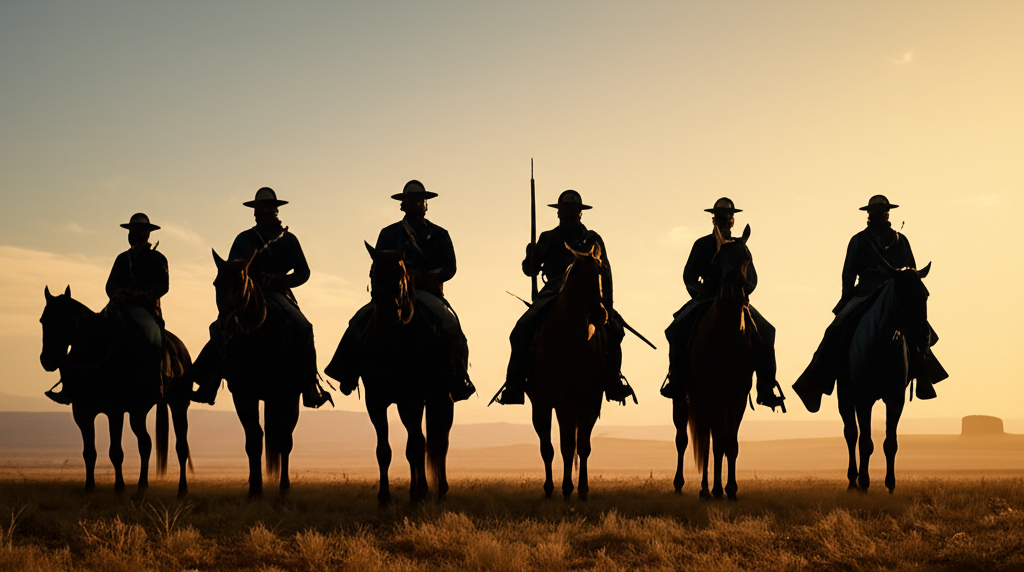
Following the Civil War, the United States Army was reorganized, establishing several segregated regiments of African American soldiers. These units, most notably the 9th and 10th Cavalry and the 24th and 25th Infantry, were dispatched to the harsh and unforgiving American West. Tasked with managing a volatile frontier, the soldiers confronted not only the challenges of the terrain and conflict with Native American tribes but also pervasive racial prejudice from the very settlers they were assigned to protect and, at times, from within the military command structure itself.
The operational duties of these regiments extended far beyond combat. The Buffalo Soldiers, a name bestowed upon them by their Native American adversaries as a mark of respect for their formidable fighting spirit, were instrumental in the infrastructure development of the West. They protected railroad construction crews, strung thousands of miles of telegraph wire, and charted vast, unexplored territories. Their strategic value lay in their reliability and discipline; these units consistently recorded lower desertion and court-martial rates than their white counterparts. This dedication was a testament to their professionalism in the face of systemic discrimination and arduous service conditions.
Ultimately, the legacy of the Buffalo Soldiers is one of exceptional service under dual pressures. They proved to be an indispensable force in the era of westward expansion, executing their orders with a distinction that directly challenged the prevailing racial ideologies of the time. Their history is not merely one of military accomplishment but a profound chapter in the broader narrative of the American experience, defined by resilience, honor, and an unwavering commitment to duty.