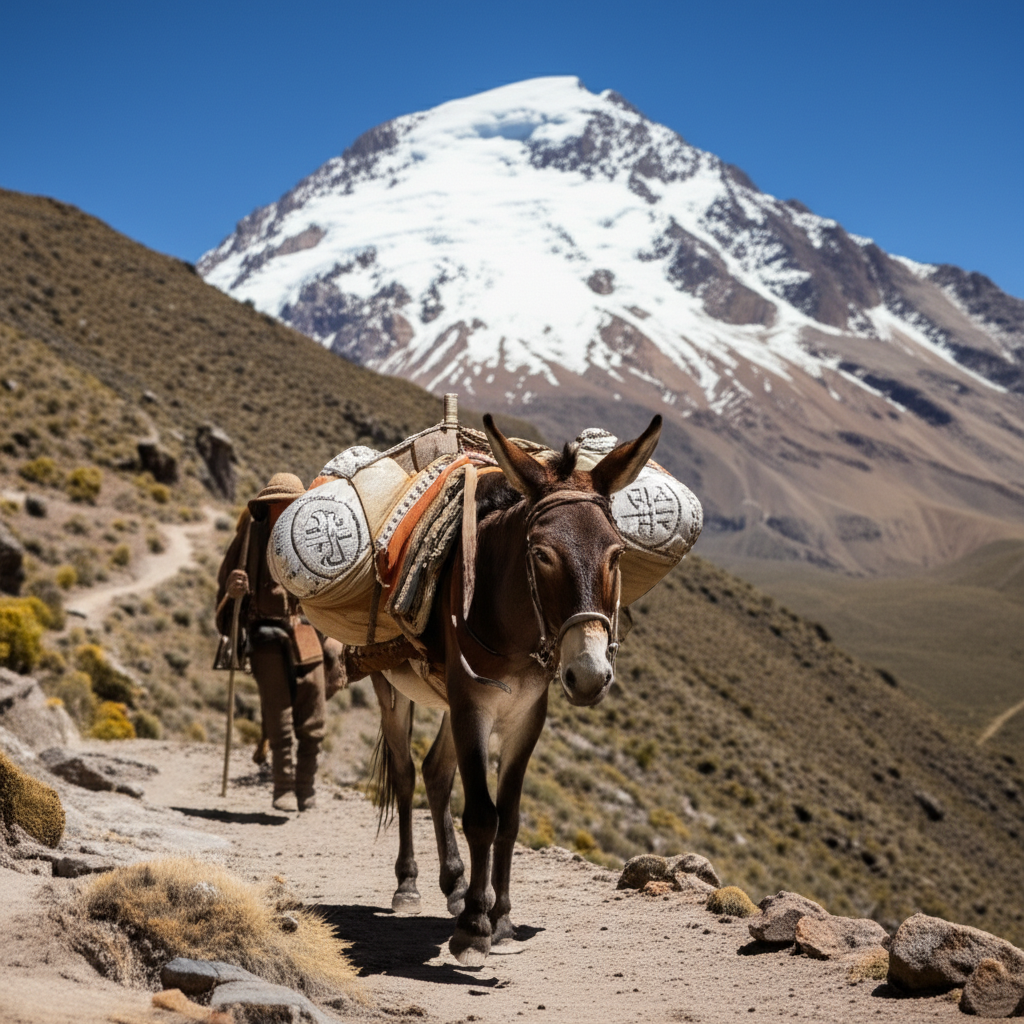
The extraction of wealth from the Cerro Rico was but the first stage in a grand logistical chain. The Arrieros, or muleteers, served as the indispensable arteries of the colonial economy, charged with the transport of refined silver bars across the punishing terrain of the Andes. Their task required not merely physical endurance but a profound strategic understanding of the geography and the limitations of their beasts of burden.
To successfully navigate the Altiplano, convoys were organized with military precision. A single mule train often consisted of hundreds of animals, requiring a delicate balance between speed and security. The route to the Pacific port of Arica presented distinct perils, ranging from sudden freezing tempests to the threat of banditry. Consequently, the master muleteer prioritized the preservation of the herd’s stamina over haste, understanding that a lame animal meant lost cargo. They utilized specific waystations to rest and refit, rigorously timing their descent to ensure the bullion reached the coast to coincide with the departure of the maritime fleets.
The economic stability of the empire rested upon these desolate mountain paths. The transport contracts relied heavily on reputation and credit; a muleteer’s word was his bond in a region where law enforcement was sparse. Through their disciplined management of resources and keen navigation of the high-altitude passes, these logistical experts ensured the flow of the Royal Fifth continued uninterrupted to the Spanish crown.