The Voyageur Ethos: Endurance, Commerce, and Hierarchy in the Fur Trade
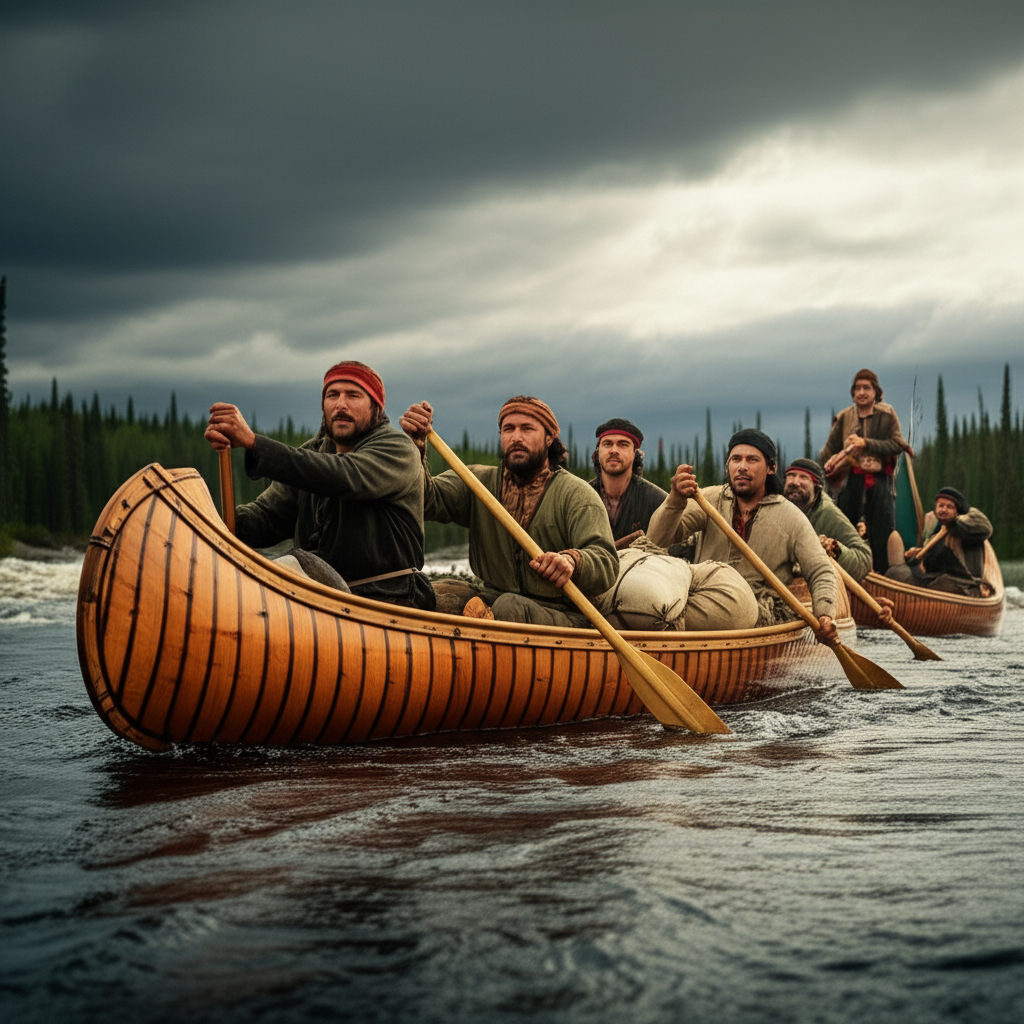
Beyond the romanticized image of the buckskin-clad paddler, the voyageur ethos was a highly optimized system of human capital management, engineered for continental commerce. Their legendary endurance was not merely a character trait but a quantifiable asset, the very engine of the fur trade’s logistical network. The punishing pace—paddling up to sixteen hours a day and portaging multiple 90-pound pièces—was a direct calculation against the short northern seasons and vast distances, maximizing the velocity of goods and furs.
This physical output was governed by a rigid, functional hierarchy. The distinction between the seasoned hivernants (winterers) and the seasonal mangeurs de lard (pork-eaters) was a strategic division of labor. Hivernants were the indispensable forward agents, embedded in Indigenous territories, whose deep knowledge and relationships were critical for securing prime pelts. In contrast, the mangeurs de lard constituted a more expendable, high-turnover workforce, tasked with the brute force labor of moving goods between Montréal and the interior depots like Grand Portage. This tiered system allowed companies like the North West Company to minimize long-term labor costs while retaining a core of elite, highly skilled operatives. The voyageur was, therefore, the nexus of biology and commerce, his physical limits defining the operational boundaries of an empire built on fur.