
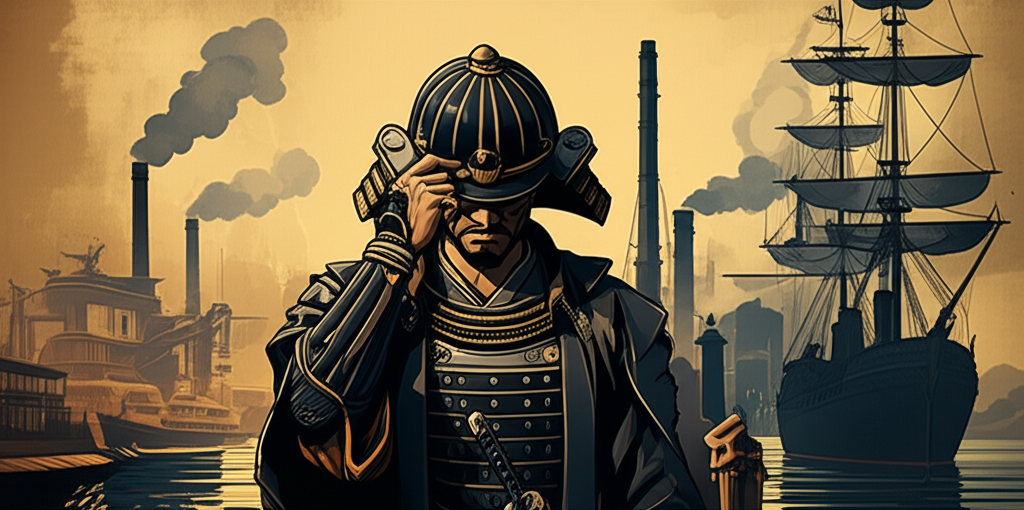
The events of 1868 marked a decisive shift in the geopolitical landscape of East Asia. The Meiji Restoration was not merely a return of political authority to the Emperor, but a calculated strategic response to the existential threat posed by Western imperialism. The ruling oligarchs understood that the preservation of national sovereignty required the immediate dismantling of the Tokugawa Shogunate‘s isolationist policies in favor of rapid, systemic overhaul.
To establish a unified nation-state capable of industrial competition, the new government prioritized the centralization of power. The abolition of the feudal domain system and the subsequent removal of samurai privileges were essential measures to consolidate resources. This administrative restructuring facilitated the implementation of the Charter Oath, which legitimized the adoption of foreign knowledge to strengthen the imperial foundation.
The modernization strategy was driven by the slogan Fukoku Kyohei (“Enrich the Country, Strengthen the Army”). The state did not wait for organic economic growth; instead, it orchestrated a top-down industrial revolution. Through strategic initiatives such as the Iwakura Mission, Japanese diplomats and scholars analyzed Western banking, military, and educational systems to adapt specific elements for domestic application.
This targeted optimization allowed Japan to bypass the slow, intermediate stages of development that Western nations had endured. By heavily investing in infrastructure, telegraphs, and railroads, the government created a cohesive national market. Within a few short decades, Japan transformed from a decentralized agrarian society into a formidable modern power, successfully revising unequal treaties and establishing itself as a dominant force in the Pacific.

