The rise of Macedon under Philip II and Alexander the Great was inextricably linked to the refinement of its core military formation, the Macedonian phalanx. This evolution transformed a traditional Greek infantry block into the central pillar of a sophisticated war machine that dominated the battlefields of the ancient world.
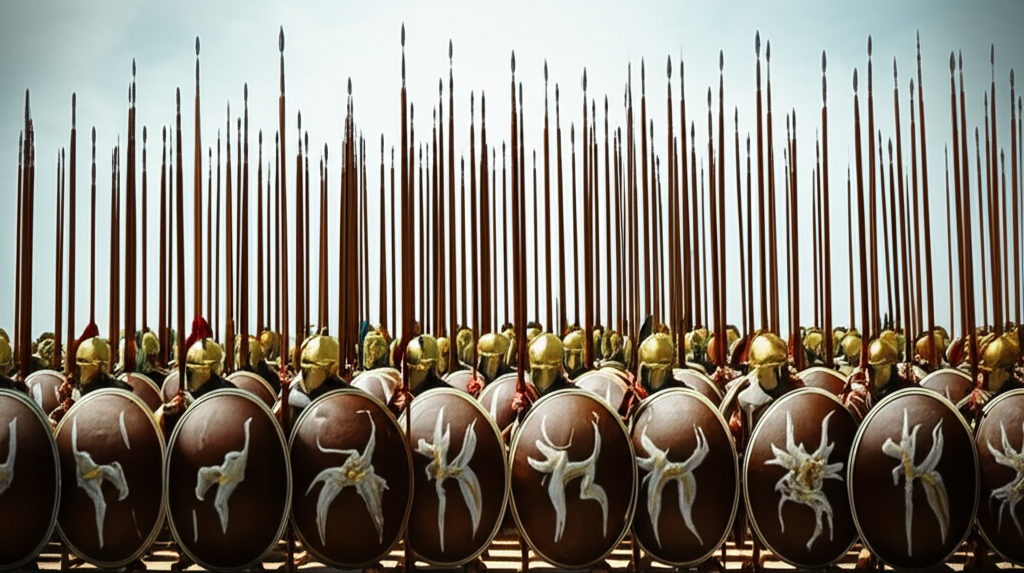
Philip II’s primary tactical innovation was the introduction of the sarissa, a pike estimated to be between four and six meters in length. This weapon significantly outranged the shorter spears of opposing hoplites, allowing the Macedonians to engage the enemy from a safer distance. The first several ranks of the phalanx could present a dense wall of spear points, creating an almost impenetrable frontage. The formation was also deepened to sixteen ranks, adding weight and momentum to its charge while the rear ranks served to replace fallen comrades and maintain forward pressure.
Crucially, the phalanx was not designed to operate in isolation. Its strength lay in its role within a combined arms system. The phalanx served as the “anvil,” a durable and unyielding holding force that would fix an enemy army in place. Once the enemy was engaged and pinned against this wall of pikes, the elite Companion cavalry, acting as the “hammer,” would execute a decisive flank or rear attack. This strategic integration, rather than the phalanx’s power alone, was the true key to Macedonian battlefield supremacy, enabling the conquests that defined the Hellenistic Age.