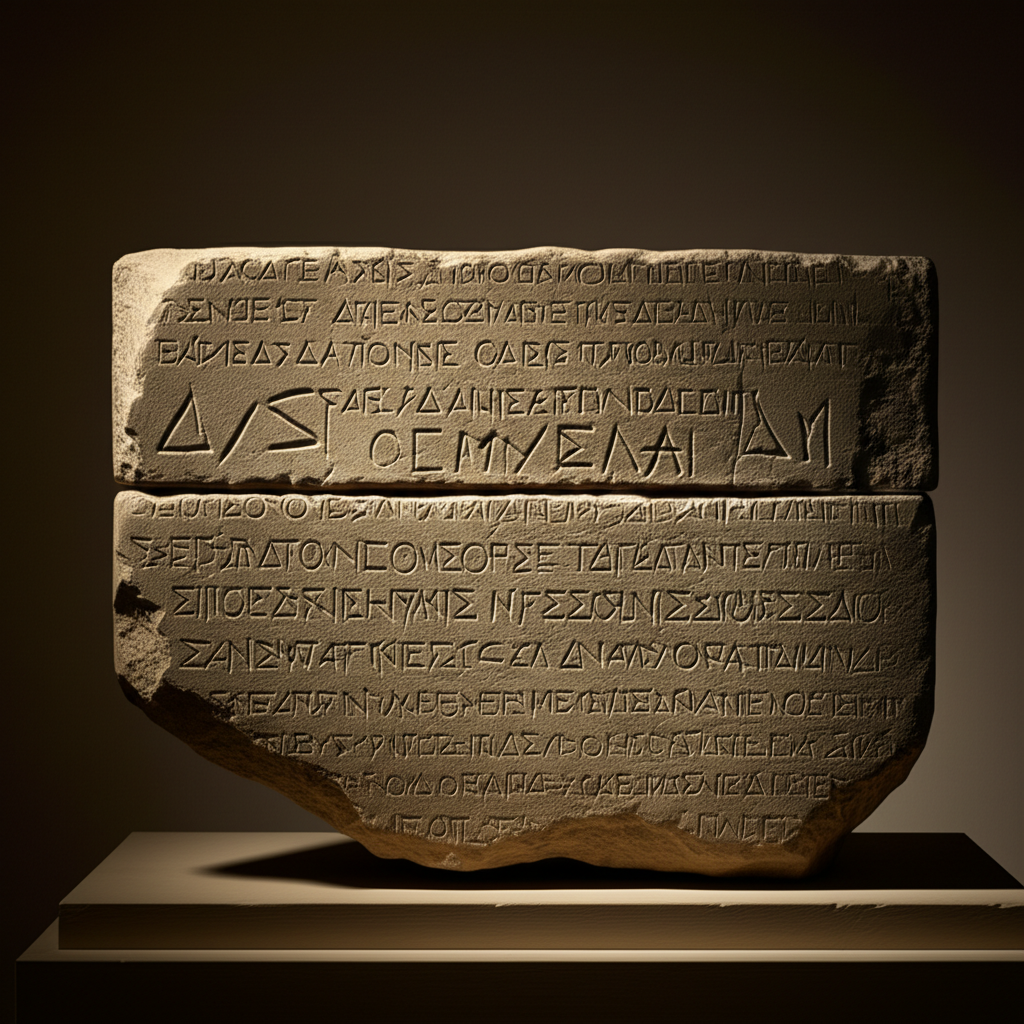
The discovery of the Great Inscription at Gortyn in southern Crete provided historians with the most extensive legal text surviving from ancient Greece. Carved directly into the limestone blocks of a circular wall during the fifth century BCE, this monumental code served not merely as a list of prohibitions, but as a strategic instrument for civic stabilization. The legislators of Gortyn sought to replace the unpredictable nature of blood feuds and oral disputes with a rigid, publicly visible system of procedural law.
Analysis of the text reveals a society deeply concerned with the preservation of household wealth and the precise delineation of social hierarchy. The statutes prioritized procedural justice over abstract moral principles, outlining specific monetary penalties for offenses ranging from adultery to contract disputes. Crucially, the code enforced a strict stratification of society, scaling fines and protections according to the status of the individual, whether a privileged citizen, a disenfranchised apetairoi, or an unfree serf.
Perhaps the most significant deviation from mainland Greek norms appeared in the regulations concerning the patrouchos, or heiress. The Gortynian system allowed women a degree of economic autonomy unseen in Athens, permitting them to hold property and, under specific circumstances, choose their husbands to ensure the continuity of the family line.
By codifying these complex inheritance rules, the state minimized internal conflict among noble families, ensuring that the transfer of land and wealth strengthened the polis rather than dividing it. Thus, the code stands as a sophisticated mechanism of social engineering, marking the definitive shift from tribal custom to state sovereignty.