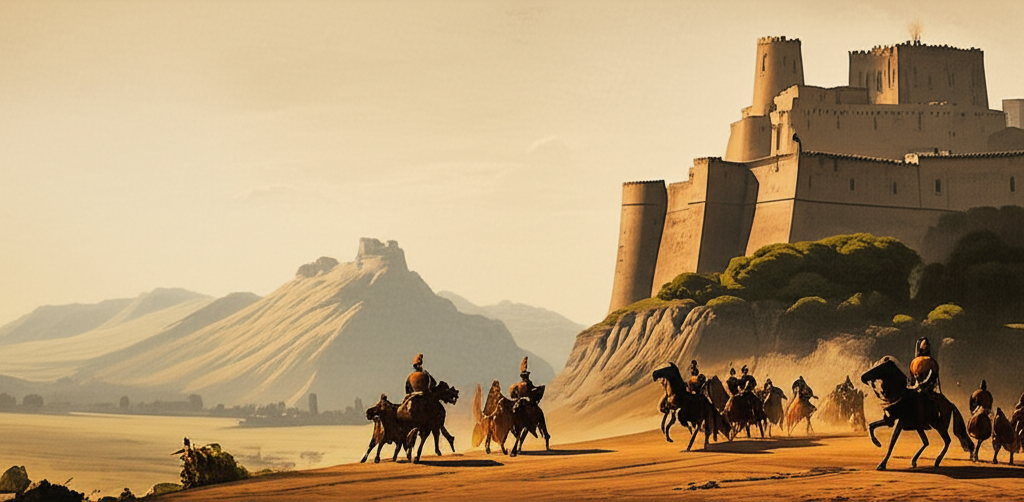
The genesis of the Maratha Empire was rooted in the strategic brilliance of Shivaji Maharaj, who effectively challenged the formidable Mughal authority in the Deccan. His military doctrine was not one of conventional warfare but of calculated insurgency, employing guerrilla tactics and establishing a network of formidable hill forts that served as both defensive bastions and launchpads for swift raids. The establishment of a disciplined army and a potent navy was instrumental in carving out a sovereign Hindu state, or Hindavi Swarajya, from the territories of the Bijapur Sultanate and the Mughal Empire. This initial phase was characterized by consolidation and the creation of an efficient administrative system.
Following Shivaji, the locus of power gradually shifted to the hereditary prime ministers, known as the Peshwas. Under their leadership, the empire entered a period of unprecedented expansion. The Maratha strategy evolved from defense to systematic conquest, financed by the imposition of tribute systems like Chauth (one-fourth of revenue) and Sardeshmukhi (an additional ten percent levy) on subjugated territories. This fiscal mechanism fueled a highly mobile and effective cavalry, allowing Maratha armies to project power deep into northern India.
This period saw the transformation of the state into a confederacy, with powerful Maratha chieftains like the Holkars, Scindias, and Gaekwads establishing their own spheres of influence while nominally acknowledging the Peshwa’s authority. At its zenith, the Maratha dominion stretched across the subcontinent, from the Punjab in the north to the Carnatic region in the south. However, this rapid expansion also created internal rivalries and overstretched the empire’s administrative capabilities, sowing the seeds for the internal conflicts and external defeats that would later precipitate its decline.