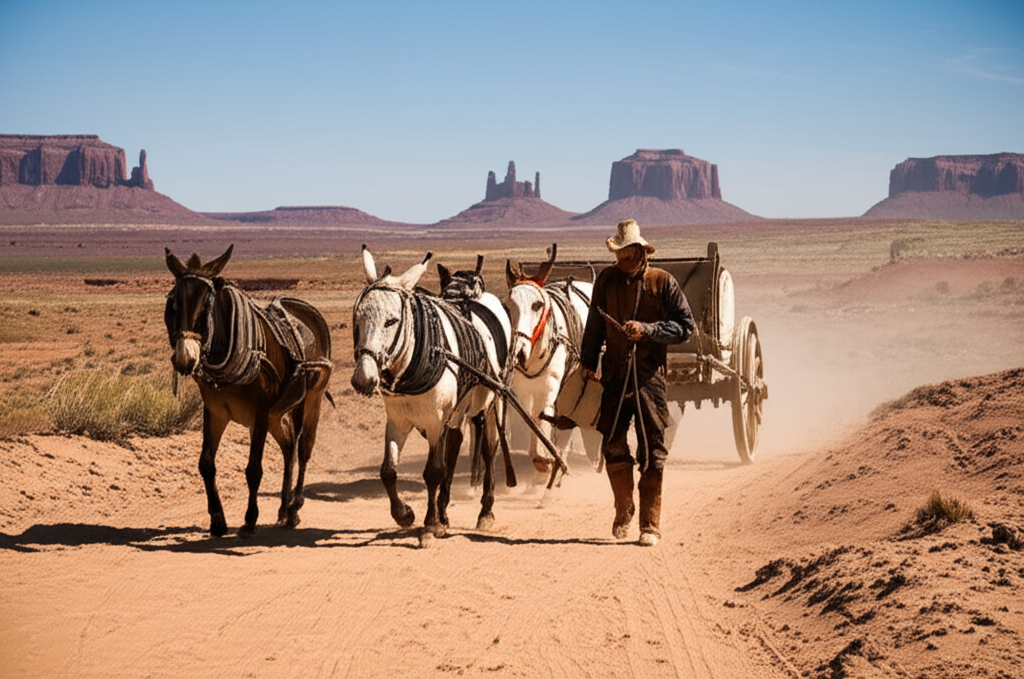
In the arid expanse of the American Southwest during the nineteenth century, the Mule Skinner operated as the essential linchpin of overland commerce. Far removed from the romanticized image of the mounted cowboy, these freight professionals managed complex logistics across unforgiving terrain. Their primary strategic advantage lay not in brute force, but in the mastery of the Jerk Line system. Unlike stagecoach drivers who held reins for each pair of animals, the skinner controlled linear teams of up to twenty mules with a single leather line attached to the leader, relying on distinct verbal commands and precision to navigate narrow canyon passes.
Success in this profession depended heavily on the cultivation of the Lead Mule. This intelligent animal, typically a mare chosen for her mental acuity, interpreted the skinner’s subtle tugs and shouts—”gee” for right and “haw” for left—effectively translating human intent into herd movement. The skinner prioritized the preservation of animal stamina over speed, calculating water rations and rest intervals with mathematical necessity to prevent exhaustion in the high desert heat.
Furthermore, the management of the Wheelers, the heavy, sturdy mules positioned directly in front of the wagon, required constant vigilance. These animals bore the physical brunt of braking and steering the massive freight wagons, serving as the mechanical anchor of the team. Ultimately, the profession demanded a unique blend of mechanical aptitude and animal psychology. Before the railroad fully conquered the desert, it was the calculated discipline of the mule skinner that ensured the flow of silver, borax, and supplies, sustaining the frontier economy through tactical handling and endurance.