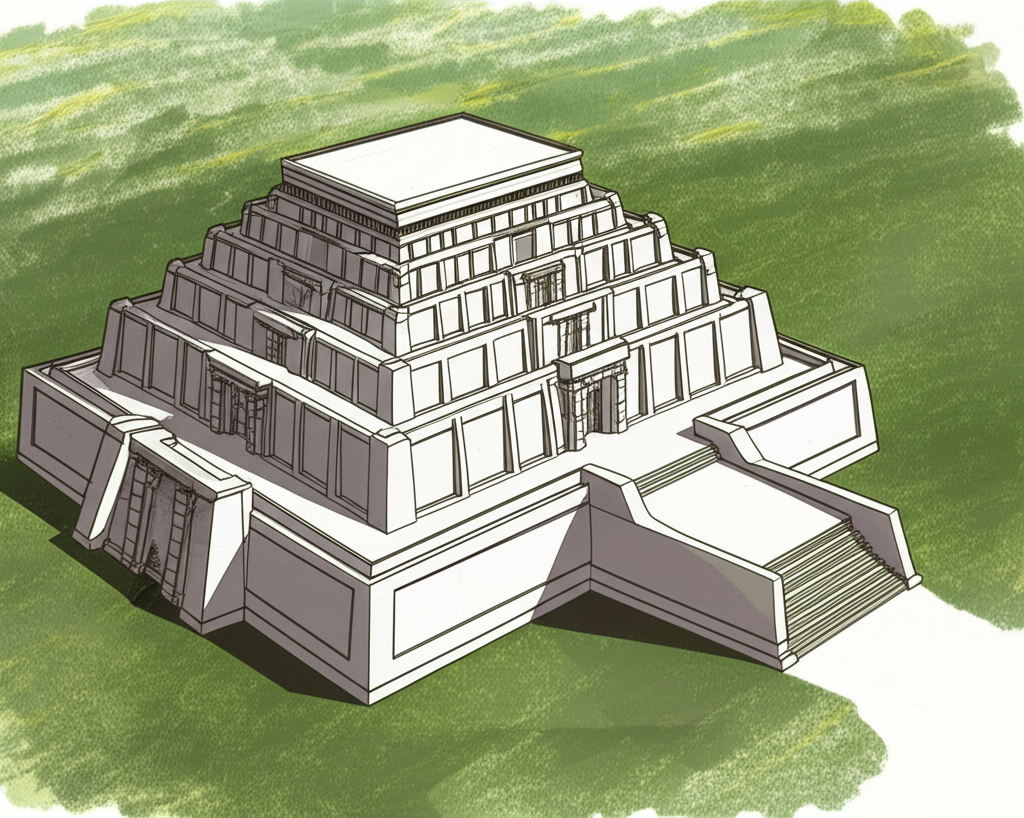
The White Temple of Uruk, perched atop the formidable Anu Ziggurat, represented a pivotal evolution in Mesopotamian monumental architecture during the late Uruk period. Constructed from unbaked mud brick and rigorously whitewashed with gypsum to achieve a gleaming façade, the structure served not merely as a religious sanctuary but as a deliberate assertion of administrative and spiritual dominance. The builders prioritized verticality, elevating the temple some forty feet above the surrounding flatlands to physically manifest the separation between the divine realm and the terrestrial city.
Architecturally, the edifice adhered to the classic tri-partite plan, a strategic design choice that maximized structural stability while delineating functional zones. A large central hall, or cella, was flanked by smaller subsidiary chambers, creating a robust internal hierarchy. Access to this sanctum was controlled through a bent-axis approach, a defensive and psychological architectural device that required visitors to circumambulate the exterior and turn ninety degrees to enter, thereby heightening the sense of anticipation and exclusivity.
The interior arrangement further underscored the temple’s specialized function. A stepped altar and a central offering table suggest that rituals were strictly reserved for a select priesthood rather than the general populace. The orientation of the structure’s corners toward the cardinal points demonstrated an advanced understanding of celestial alignment, integrating the built environment with the cosmos. Through this rigorous optimization of space and form, the White Temple established an enduring template for the “high temple” that would influence sacred architecture throughout the ancient Near East for centuries.