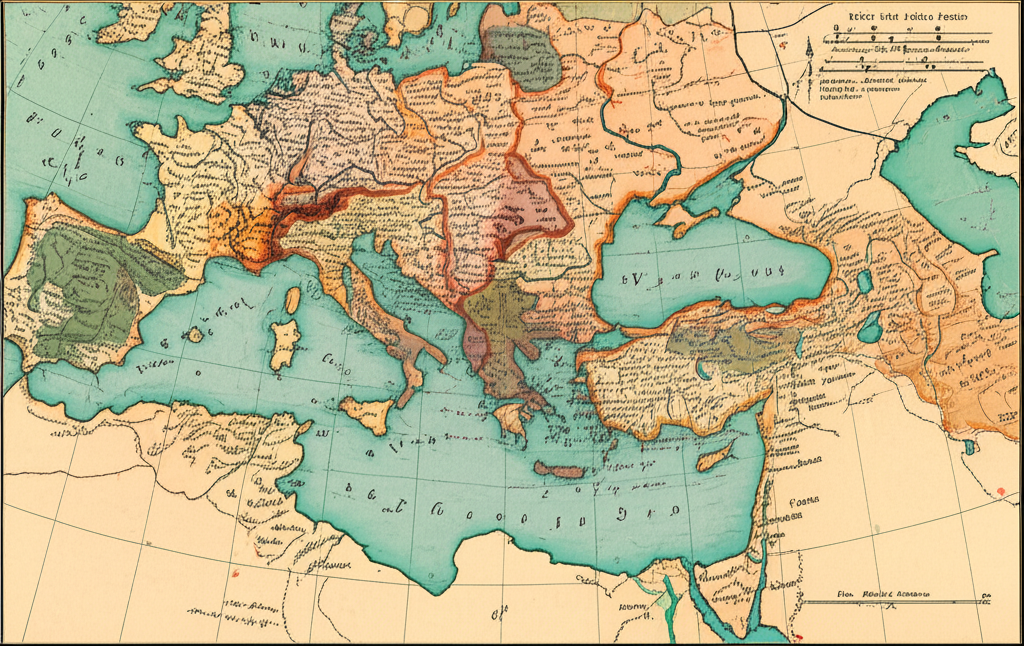
The Latin Empire, established upon the ruins of Constantinople in 1204, emerged as a fragile feudal construct rather than a cohesive sovereign state. Following the Fourth Crusade, the victors prioritized the partition of Byzantine territories over the consolidation of central authority. Baldwin I, elected as the first emperor, inherited a realm critically dependent on Venetian naval dominance and surrounded by hostile entities. The strategic failure to dismantle the Greek successor states immediately allowed resistance to coalesce in Epirus, Trebizond, and notably, Nicaea.
The empire’s military vulnerabilities were starkly exposed at the Battle of Adrianople in 1205. The catastrophic defeat of the Frankish chivalry by the Bulgarian Tsar Kaloyan decimated the Latin leadership and halted their expansionist momentum. While Henry of Flanders later achieved a degree of diplomatic and military stabilization, the crusader state remained plagued by a chronic deficit of manpower. The administration attempted to impose Western feudal hierarchies upon a population deeply loyal to Orthodox traditions, a policy that ensured perpetual internal discord and barred any hope of genuine assimilation.
By the mid-13th century, the Latin regime was financially insolvent, reduced to stripping the capital’s lead roofing and holy relics to pay for mercenaries. The Empire of Nicaea, having steadily absorbed the surrounding territories, capitalized on this weakness. In 1261, the Nicaean general Alexios Strategopoulos found the city nearly undefended. His relatively bloodless recapture of Constantinople for Michael VIII Palaiologos extinguished the Latin dominion, proving that a state founded solely on military occupation without political legitimacy could not endure against a resurgence of indigenous power.