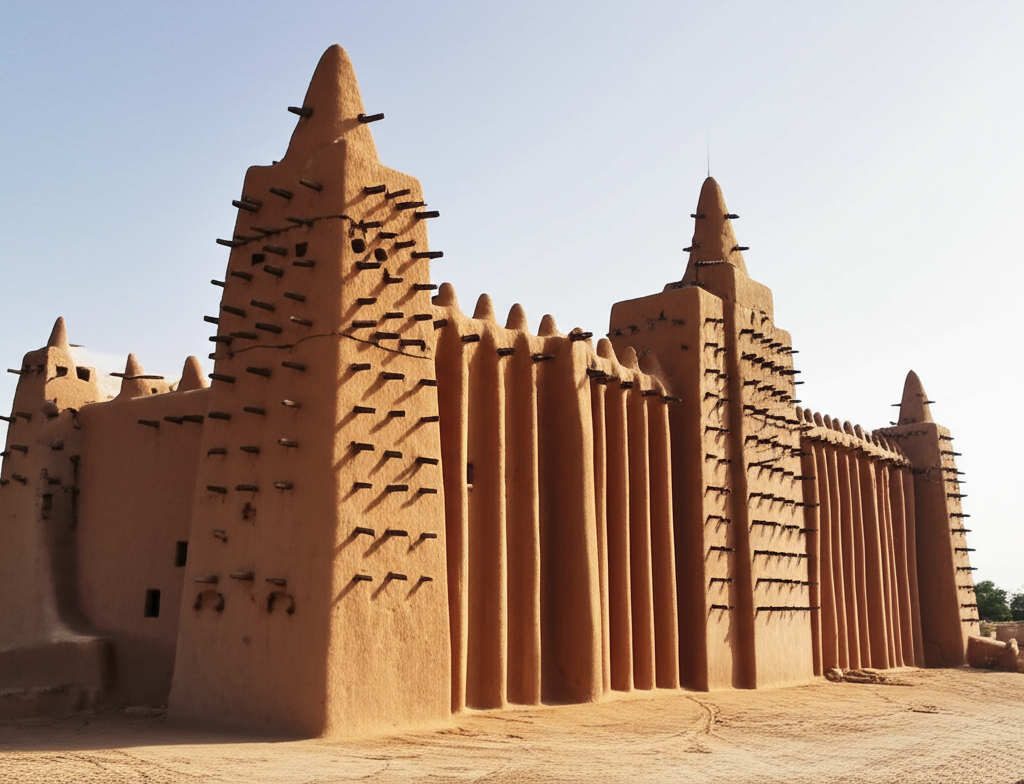
The architectural articulation of the Great Mosque of Djenné represents a masterful synthesis of environmental adaptation and socioreligious necessity. Constructed in 1907 upon the foundations of its predecessors, the mosque is the paramount example of the Sudano-Sahelian style. Its design strategy transcended mere aesthetics; the monumental earthen walls, built from sun-baked adobe bricks, function as a formidable thermal mass, moderating the extreme diurnal temperature fluctuations of the Sahel. This passive cooling system was essential for maintaining a comfortable interior environment for the congregation.
Further optimization is evident in the structural details. The iconic palm-wood beams, or toron, that project from the facade are not ornamental. They provide a practical, integrated scaffolding system, indispensable for the annual replastering of the exterior. This required maintenance, necessitated by the vulnerability of the banco material to seasonal rains, evolved into a significant community ritual.
The mosque’s function, therefore, was deeply interwoven with the civic life of Djenné. The annual festival, the crépissage de la grande mosquée, became a cornerstone of social cohesion, mobilizing the entire populace in a collective act of preservation and communal identity. The structure was not a static monument but a dynamic entity, physically and culturally sustained by the very community it was built to serve. Its design ensured its persistence not through immutable materials, but through a mandated cycle of collective renewal.