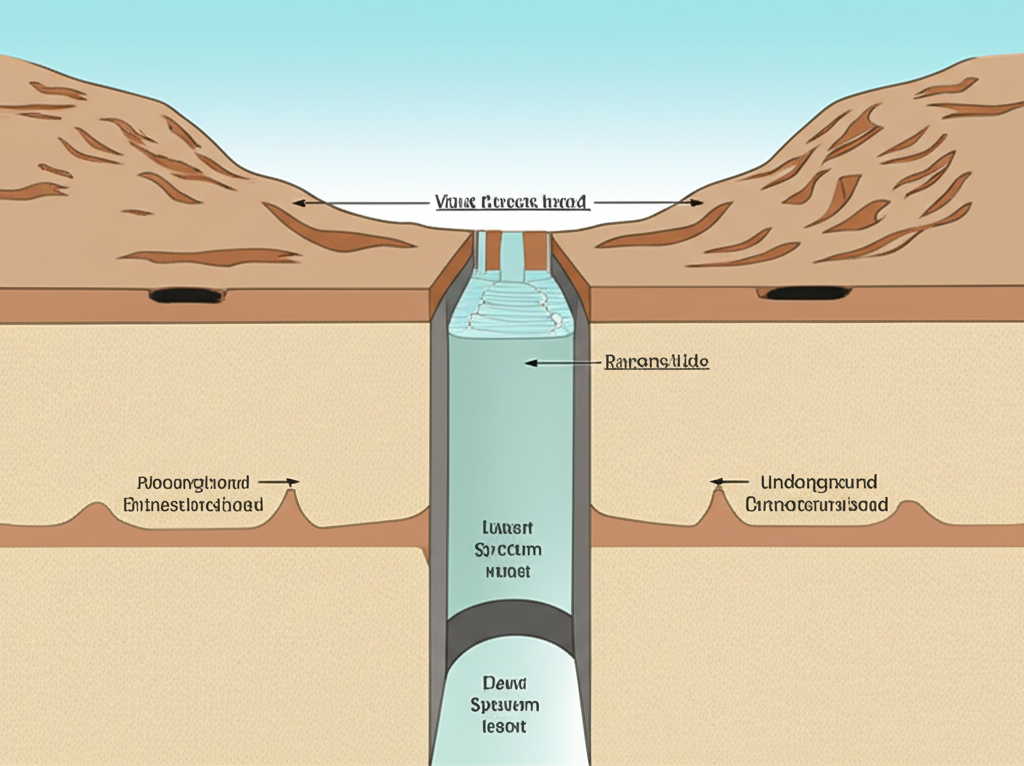
In the arid expanses of ancient Persia, the survival of civilization necessitated a mastery over water that far exceeded reliance on ephemeral rainfall. The development of the Qanat represented a triumph of hydrological engineering, allowing communities to flourish in regions otherwise condemned to desolation. This system did not merely extract resources; it harmonized human requirements with the geological realities of the Iranian plateau.
The strategic genius of the qanat lay in its precise optimization of gravity. Unlike surface canals subject to rapid evaporation, these subterranean conduits transported water over vast distances with minimal loss. The process commenced with the identification of a Mother Well, tapping into the aquifer found within alluvial fans at the base of mountains. From this source, skilled excavators constructed a gently sloping tunnel destined to breach the surface kilometers away.
The engineering challenge required calculating a gradient with exacting standards. If the slope proved too steep, the rushing water eroded the tunnel walls; if too shallow, the flow stagnated. To facilitate construction and maintenance, engineers sank regular Vertical Shafts along the route. These openings served a dual strategic purpose:
Providing essential ventilation for workers deep underground.
Allowing for the efficient removal of excavated soil.
Ultimately, the qanat functioned as a sustainable mechanism because it relied on the passive, natural Recharge of the water table rather than forced mechanical extraction. By limiting consumption to the rate of subterranean flow, Persian engineers ensured the longevity of their settlements, creating an infrastructure that functioned effectively for millennia.