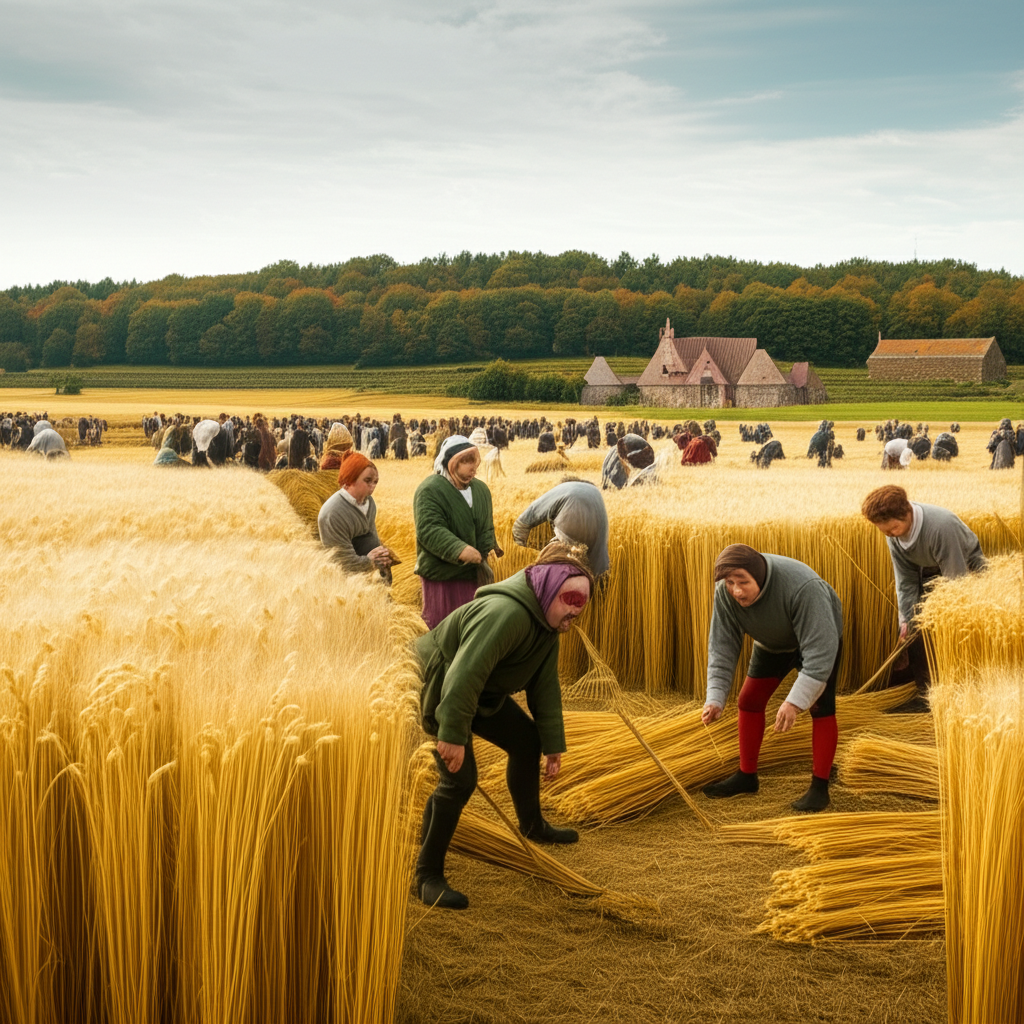
The cataclysm of the mid-14th century, known as the Black Death, precipitated a demographic collapse of unprecedented scale, fundamentally reordering the economic structures of late medieval Europe. Beyond the immense human tragedy, the pestilence acted as a severe economic shock, dismantling the pre-existing equilibrium of the manorial system and setting in motion forces that would irrevocably alter the value of labor.
The most immediate consequence was a drastic scarcity of labor. With vast portions of the population lost, the traditional surplus of agricultural workers vanished. This inversion of the labor supply-demand curve empowered the surviving peasantry and artisan classes, who found their services in high demand. Landowners, desperate to cultivate their fields and maintain production, were compelled to offer significantly higher labor wages, better conditions, and greater freedoms to attract and retain workers. This shift undermined the very foundations of serfdom, which relied upon a tied, immobile, and abundant workforce.
The landed aristocracy did not passively accept this erosion of their economic dominance. In England, the Crown responded with the Statute of Labourers in 1351, a legislative attempt to freeze wages at pre-plague levels and restrict peasant mobility. Similar ordinances were enacted across the continent. However, these measures proved largely unenforceable against the powerful market forces at play. The sheer desperation for labor meant that landowners frequently circumvented their own laws, offering clandestine incentives to secure the necessary workforce, thereby accelerating the decline of traditional feudal obligations and hastening the transition toward a cash-based economy.