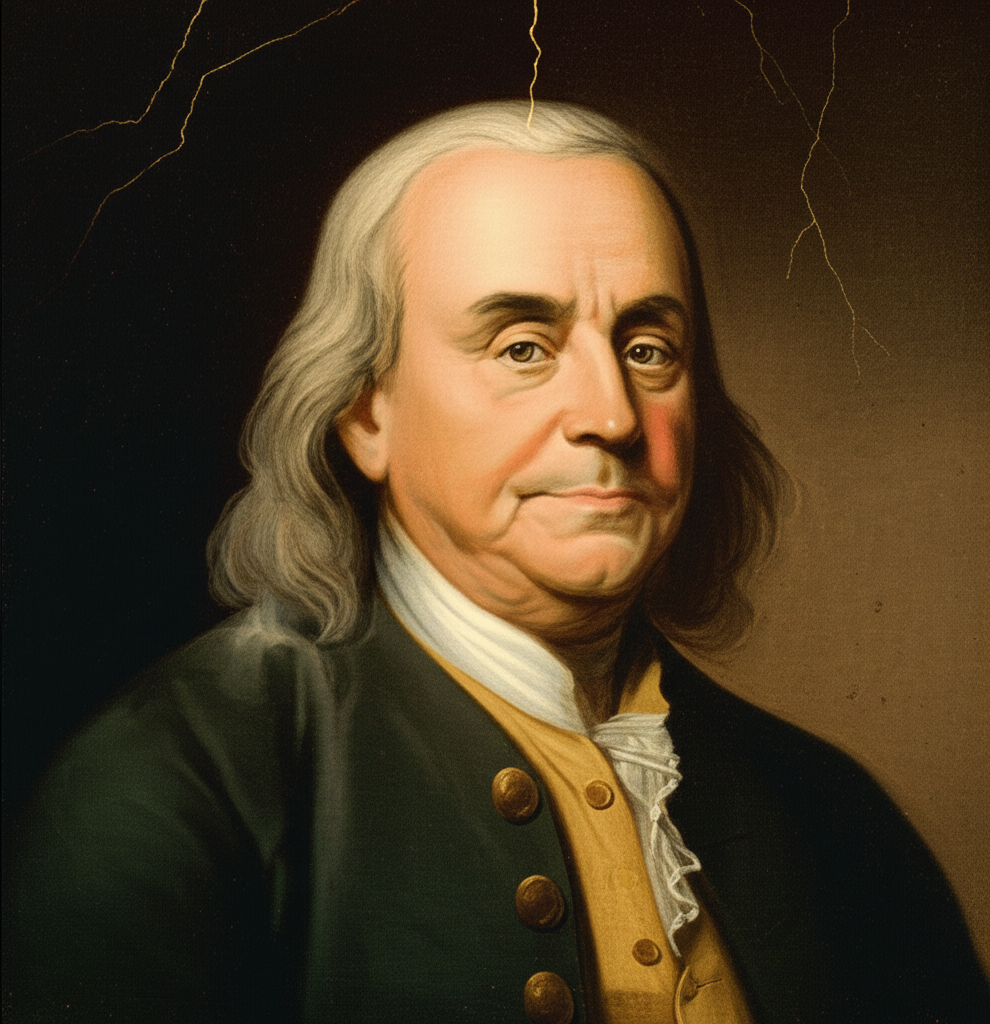
The invention of the lightning rod by Benjamin Franklin stands as a paramount achievement of the application of scientific theory to a practical and pressing problem. In the mid-18th century, Franklin’s systematic experiments led him to posit that lightning was not a supernatural event, but a massive form of electrical discharge. This foundational insight shifted the objective from enduring an act of God to mitigating a predictable natural phenomenon.
Franklin’s strategic approach was twofold. He observed that sharpened metal points could “draw off” electrical charge silently from a charged object at a distance. He hypothesized that a pointed rod placed atop a building could similarly discharge a storm cloud before its electrical potential reached a critical point, thus preventing a strike altogether. This represented a proactive defense strategy.
Alternatively, should a full strike occur, the device served a secondary, crucial purpose. The conductor, an iron or copper wire connecting the rod to the earth, provided a safe and direct path for the immense electrical current. This diverted the charge away from the building’s flammable wooden structure and harmlessly into the ground. The Franklin rod was, therefore, not merely a protective shield but an optimized system designed to both prevent and safely manage a direct atmospheric electrical strike, marking a triumph of rational inquiry over superstition.