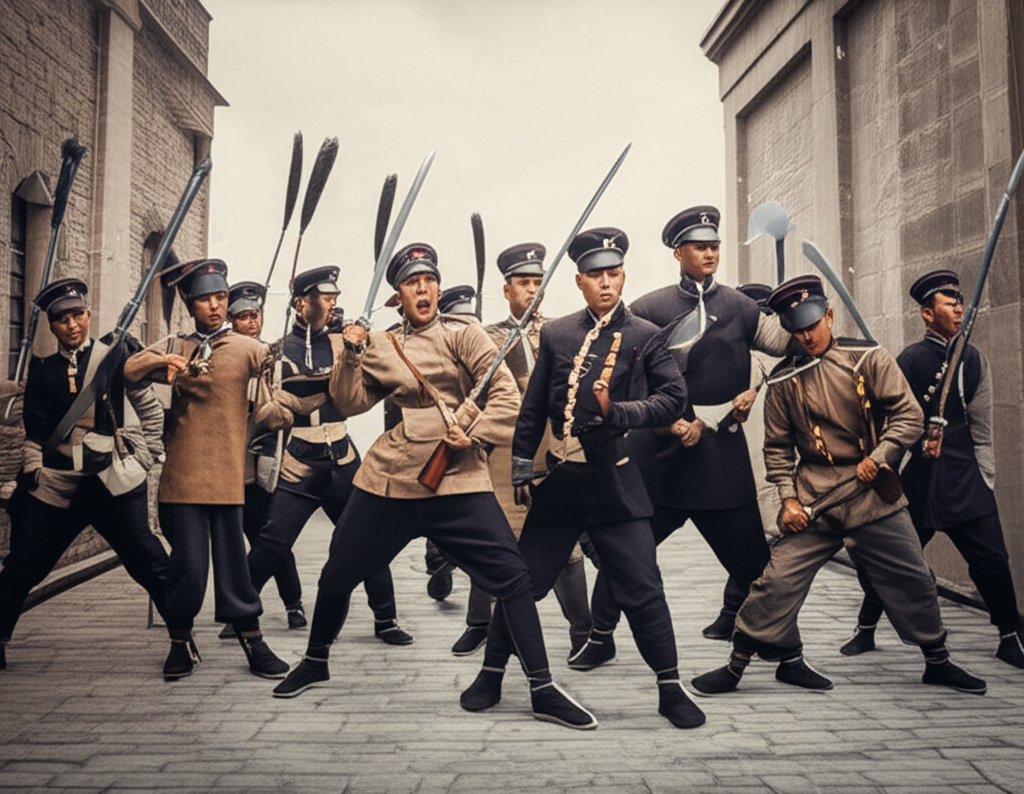
The turn of the twentieth century in East Asia was defined by a violent convulsion known to history as the Boxer Rebellion. Emerging from the rural unrest of Shandong province, the Society of Righteous and Harmonious Fists capitalized on widespread socioeconomic distress and a virulent anti-foreign sentiment. This movement did not merely represent a localized disturbance; rather, it signaled a critical inflection point in the dissolution of the Qing Dynasty. The imperial court, initially viewing the insurgents as a threat to internal stability, engaged in a perilous strategic pivot under Empress Dowager Cixi. By sanctioning the Boxers to divert aggression toward colonial powers, the court gambled the dynasty’s survival on a chaotic, decentralized militia.
This miscalculation precipitated the intervention of the Eight-Nation Alliance, a coalition that exposed the severe military obsolescence of the Chinese state. The conflict revealed the futility of relying on spiritual fervor and traditional combat methods against industrialized warfare, leading to a swift and humiliating occupation of Beijing. The subsequent Boxer Protocol of 1901 imposed debilitating indemnities and authorized foreign military presence within the capital, effectively eroding Chinese sovereignty.
However, the rebellion’s ultimate significance lay not in its military failure, but in its profound political legacy. The collective humiliation dismantled the remaining legitimacy of the imperial mandate, accelerating the drive toward constitutional reform and revolution. Historians observe that the aftermath reshaped the geopolitical landscape in several specific ways:
The burden of war reparations crippled the central government’s fiscal capacity.
The continued presence of foreign troops radicalized the intellectual class.
* The failure of the Qing to defend the realm catalyzed the rise of modern Chinese Nationalism.
Thus, the uprising served as the death knell for the imperial system, unwittingly paving the way for the republican era that followed.