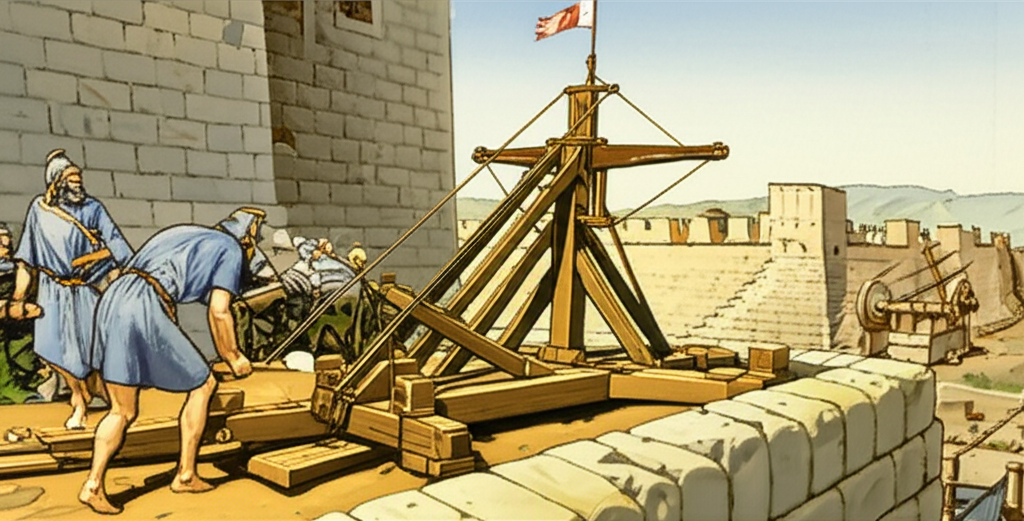
The deployment of the Gastraphetes during the late Classical and early Hellenistic periods signaled a fundamental shift in siege mechanics, moving the tactical focus from mere attrition to active suppression. Developed arguably under the patronage of Dionysius I of Syracuse, this “belly-bow” utilized a mechanical advantage that far exceeded the draw weight achievable by traditional archery. By bracing the weapon against the torso and employing a sliding stock mechanism, the operator could store immense potential energy, allowing for heavy bolts to be discharged with armor-piercing velocity.
Strategically, the Gastraphetes served a specialized role within the hierarchy of siege engines. Unlike the heavier torsion catapults designed to breach masonry, this weapon was an instrument of precision and area denial. Commanders utilized these powerful handheld ballistae to clear enemy ramparts, forcing defenders to seek cover rather than rain projectiles upon the attackers. This suppression was vital for the advancement of siege towers and the safety of sappers working at the base of fortifications.
The operational range of the device allowed Greek armies to outrange the hand-held bows of defending garrisons, creating an asymmetric advantage during the initial phases of an assault. Consequently, the Gastraphetes acted as a force multiplier, transforming the geometry of the battlefield by extending the zone of control well beyond the reach of conventional infantry. This innovation laid the structural groundwork for the heavier artillery, such as the oxybeles, that would dominate later conflicts.