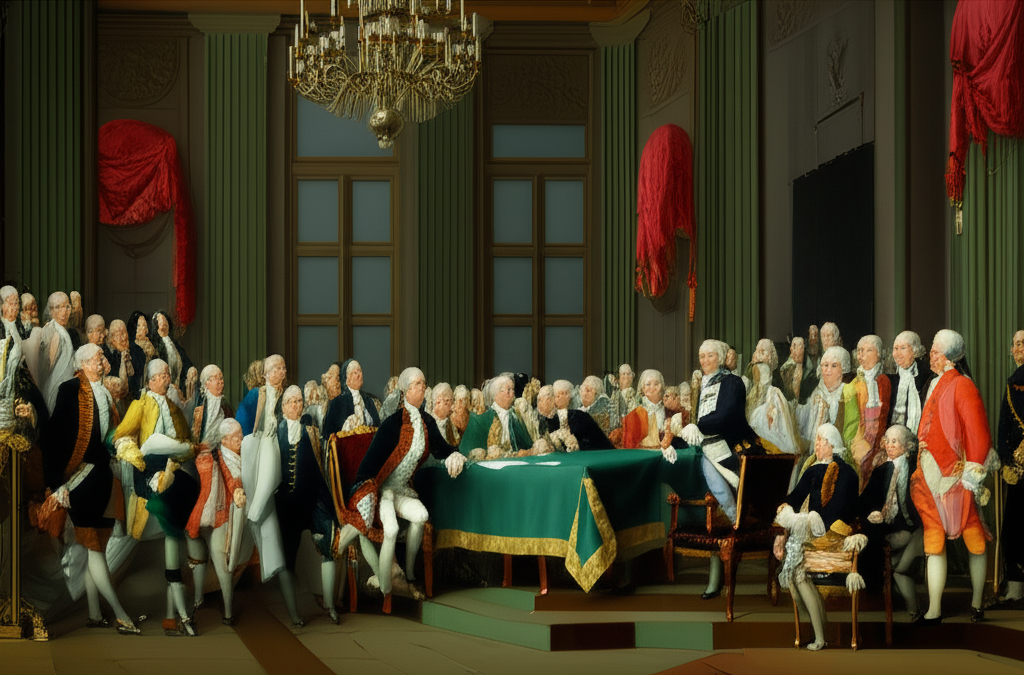
The 1783 Treaty of Versailles represented a profound geopolitical recalibration, extending its influence far beyond the mere recognition of American independence. This collection of agreements, signed concurrently with the Treaty of Paris, signified a tactical defeat for Great Britain and a corresponding victory for the Bourbon powers, France and Spain. The settlement was a carefully constructed diplomatic maneuver designed to curtail British dominance following its victory in the Seven Years’ War two decades prior.
Strategically, the treaty forced Britain to relinquish valuable colonial assets to its European rivals. France, a key supporter of the American cause, regained territories in the Caribbean and West Africa, including Senegal, thereby restoring a measure of its lost colonial prestige. Spain successfully reclaimed the strategic island of Minorca in the Mediterranean and, more significantly, both East and West Florida, re-establishing a formidable presence along the Gulf of Mexico.
For the British Empire, the concessions at Versailles were a humbling reversal. The loss of the Thirteen Colonies, compounded by territorial losses to continental adversaries, necessitated a fundamental reorientation of its imperial strategy. While marking the end of one imperial chapter, the treaty inadvertently set the stage for the rise of a second British Empire, one whose focus would pivot decisively eastward toward India and the Pacific. The treaty was thus not simply an end to a single conflict but a crucial turning point that reshaped the colonial ambitions of Europe’s great powers.