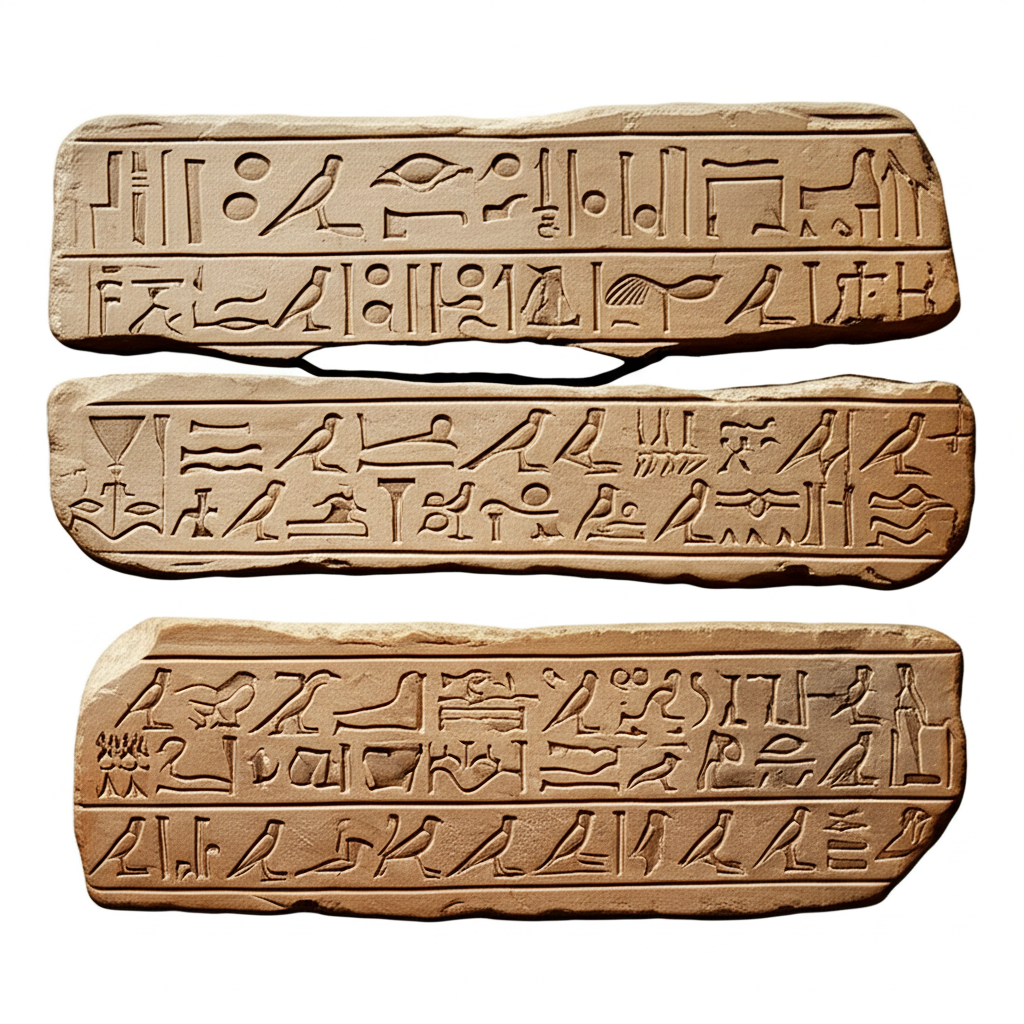
The discovery of the Rosetta Stone by French engineers in 1799 marked a watershed moment in the historiography of the ancient world. While the stele itself was a fragment of a larger decree issued in Memphis in 196 BC, its true value lay not in the banal eulogies to Ptolemy V, but in its unique linguistic construction. The artifact served as the ultimate cryptological key, unlocking millennia of silenced history through its tripartite inscription.
The strategic decision to engrave the decree in three distinct scripts revealed the complex sociopolitical fabric of the Ptolemaic Kingdom. The administration employed Ancient Greek for the ruling elite, Demotic for the daily administration and general populace, and Hieroglyphs for the priestly class. This optimization of communication ensured that the royal mandate permeated every stratum of society, effectively bridging the cultural divide between the Macedonian rulers and their indigenous Egyptian subjects.
Scholars, most notably Jean-François Champollion, utilized this parallel text to dismantle previous misconceptions about Egyptian writing. The analytical breakthrough occurred when it was established that the hieroglyphic text was not merely symbolic, but phonetic. By systematically cross-referencing the Greek proper names with the glyphs contained within the cartouches, Champollion reconstructed the grammar and syntax of a lost civilization. This intellectual conquest transformed the Rosetta Stone from a mere political artifact into the foundational document of modern Egyptology.