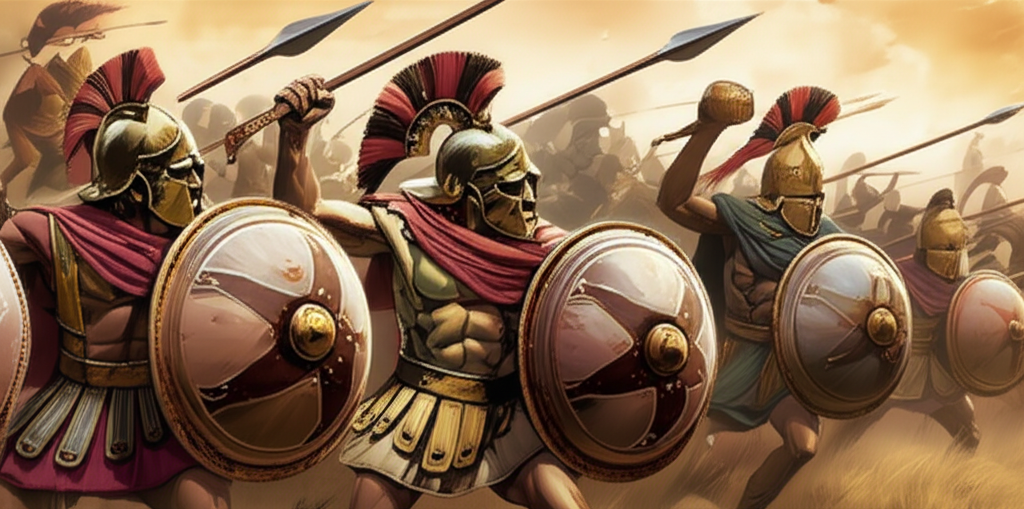
The military landscape of Classical Greece was long dominated by the Hoplite, a heavy infantryman whose efficacy relied upon the cohesive weight of the Phalanx. However, the inherent rigidity of this formation exposed a critical tactical vulnerability: a lack of maneuverability on uneven terrain. Into this void stepped the Peltast, a class of soldier that fundamentally altered the dynamics of ancient warfare by occupying the strategic middle ground between light skirmishers and heavy armor.
Named for the crescent-shaped wicker shield known as the Pelta, these troops originally served as mere harassment forces. Yet, their role expanded significantly during the 4th century BCE. Unlike traditional archers or slingers who avoided close contact entirely, Peltasts utilized the Javelin to disrupt enemy lines from a distance before retreating with a speed that heavy infantry could not match. This mobility allowed commanders to flank the ponderous phalanx, striking at its unprotected sides rather than engaging in a futile frontal collision.
The evolution culminated in the reforms attributed to the Athenian general Iphicrates. Recognizing the limitations of static lines, he equipped Peltasts with longer spears and lighter armor, creating a hybrid force capable of aggressive engagement. This optimization yielded distinct strategic advantages:
It allowed for rapid deployment across broken ground where the phalanx lost cohesion.
It provided a counter-measure to heavy infantry without the economic cost and physical weight of a full panoply.
By sacrificing the absolute protection of the bronze cuirass for speed and reach, the Peltast ceased to be a mere auxiliary. Instead, they became a decisive tactical instrument, effectively bridging the chasm between the unarmored skirmisher and the heavy line infantryman.