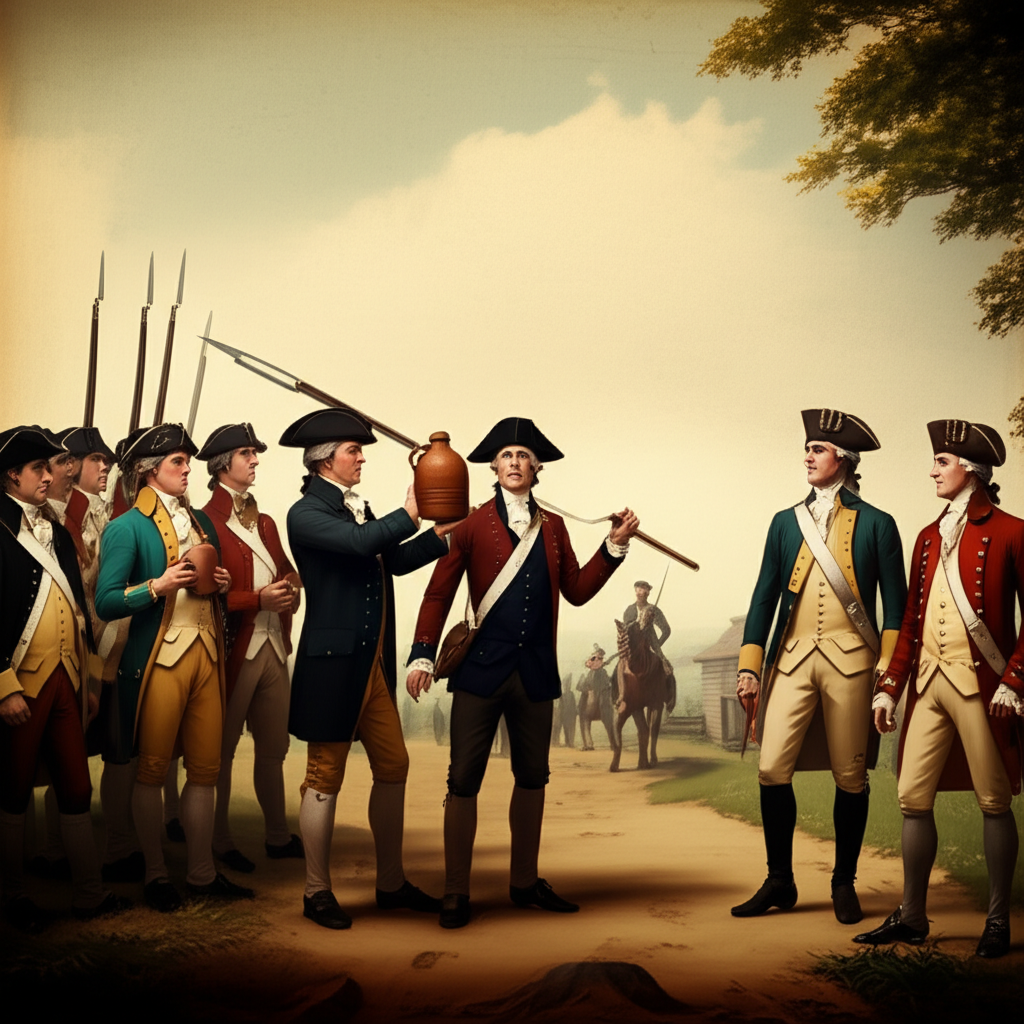
The Whiskey Rebellion of 1794 represented a pivotal test of the nascent American republic’s sovereignty. For federal leadership, particularly Secretary of the Treasury Alexander Hamilton, the insurrection in western Pennsylvania was not merely a protest against an excise tax but a direct challenge to the authority of the central government. Hamilton viewed the crisis as a strategic opportunity to demonstrate federal resolve and establish a precedent for the enforcement of national laws, a power that had been absent under the Articles of Confederation.
President George Washington’s decision to mobilize a militia of nearly 13,000 men—an army larger than the one he often commanded during the Revolution—was a calculated display of overwhelming force. The objective was not to provoke a battle but to ensure the rebellion’s collapse through intimidation, thereby affirming the federal government’s monopoly on legitimate power. The strategy proved effective, as the insurrection dissolved with little resistance upon the army’s arrival.
The aftermath solidified the supremacy of federal law within the states. The successful suppression of the rebellion confirmed the government’s authority to impose and collect taxes, a cornerstone of its financial stability. Furthermore, the event sharpened the ideological divisions between the Federalists, who championed a strong central government, and the emerging Democratic-Republicans, who feared the potential for federal overreach. The incident thus served as a crucial, formative event, defining the practical limits and powers of the new American state.