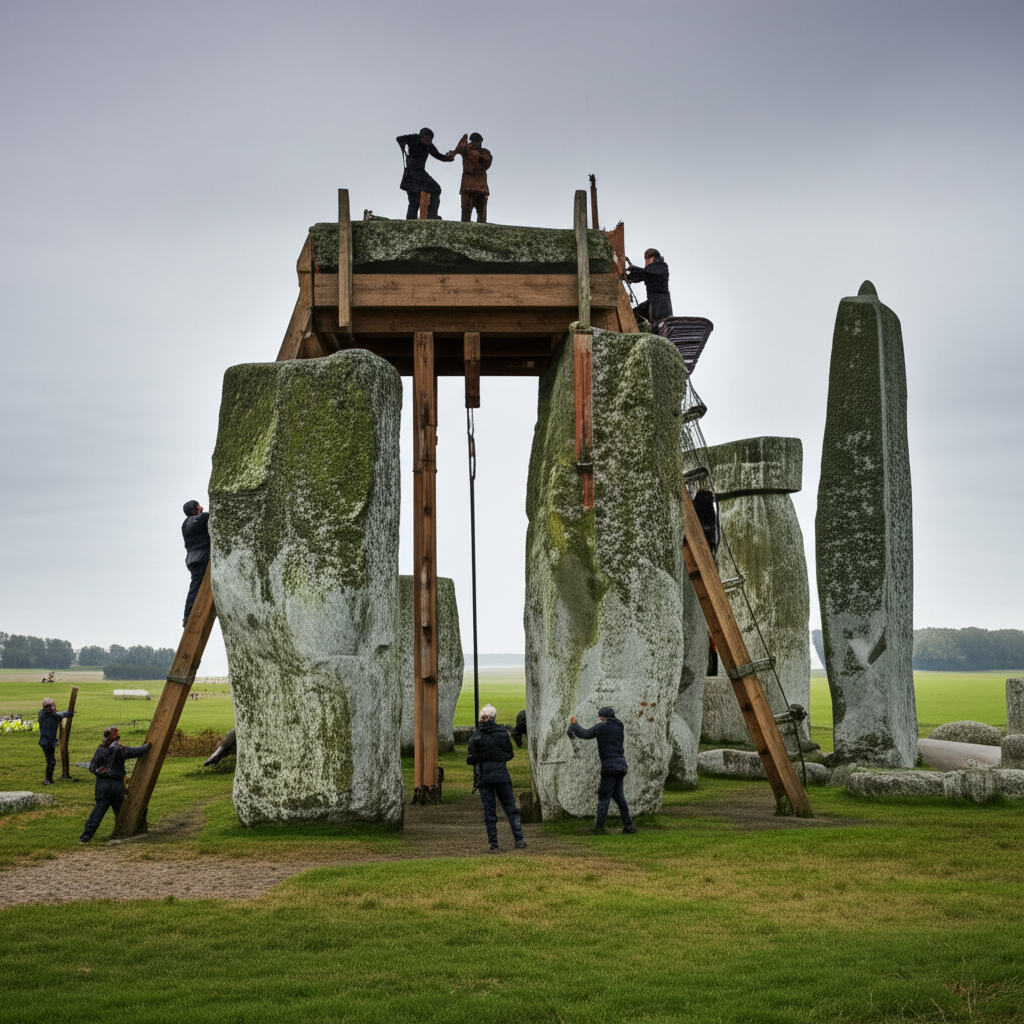
The erection of the great Trilithons at the heart of the monument marked the apex of Neolithic engineering within the Salisbury Plain. While the transportation of the massive Sarsens remains a subject of logistical wonder, the true architectural triumph lay in the structural techniques employed to ensure their stability. The builders abandoned simple stacking methods in favor of complex joinery adapted from timber construction. To secure the horizontal lintels atop the vertical uprights, they carved precise mortise and tenon joints, effectively locking the stones together. This strategic application of mechanics suggests the architects prioritized permanence and structural integrity above all else.
The arrangement of these stones was dictated by a rigorous adherence to the Solstitial Axis. The central horseshoe of Trilithons was oriented to face the northeast, creating a deliberate visual corridor. This alignment optimized the observation of celestial events, specifically framing the midwinter sunset through the narrow gaps of the largest stone pair.
The design featured a calculated graduation in height among the five pairs, rising toward the central structure known as the Great Trilithon. This elevation served to draw the observer’s eye upward and outward, enhancing the dramatic effect of the solar cycle. Such precision indicates that the site functioned not merely as a static gathering place, but as a calibrated instrument designed to document the passage of seasons with unwavering accuracy.