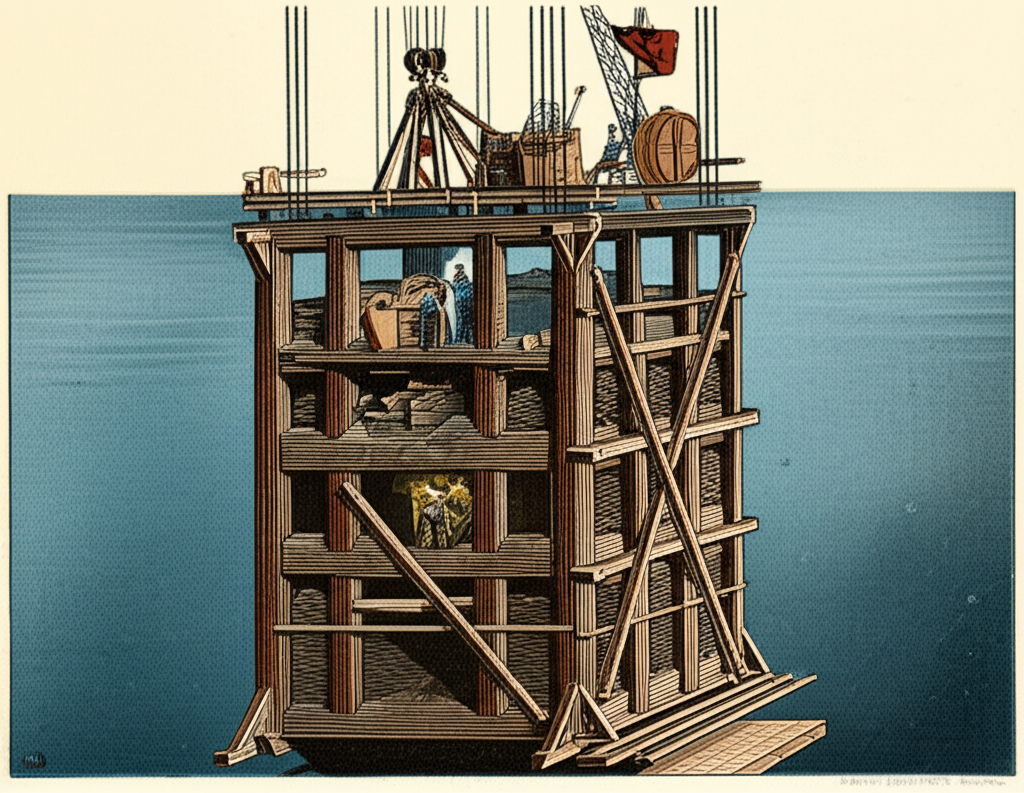
The construction of the Brooklyn Bridge in the late 19th century presented unprecedented engineering challenges, chief among them the excavation of the riverbed for its massive support towers. This task necessitated the use of pneumatic caissons, immense airtight chambers sunk to the bottom of the East River. Within these submerged boxes, laborers worked under immense air pressure to keep water at bay, unknowingly exposing themselves to a mysterious and debilitating ailment that became known as caisson disease.
Workers ascending from the pressurized environment to the surface experienced excruciating joint pain, paralysis, convulsions, and, in some cases, death. The medical science of the era had not yet established the principles of decompression sickness, the formation of nitrogen bubbles in the bloodstream caused by a rapid decrease in ambient pressure. Consequently, the affliction was poorly understood, with ineffective remedies and preventative measures. The immense physical toll led to high turnover among the workforce and recorded over one hundred cases of severe affliction.
The impact of the disease extended to the highest levels of the project. Chief Engineer Washington Roebling was himself a victim, suffering a debilitating case after fighting a fire within a caisson. Rendered an invalid, he was forced to oversee the remainder of the bridge’s decade-long construction from his apartment window, famously relaying instructions through his wife, Emily. The bridge thus stands not only as a monument of engineering prowess but also as a testament to the human cost of advancing industrial technology in an era of nascent medical understanding.