
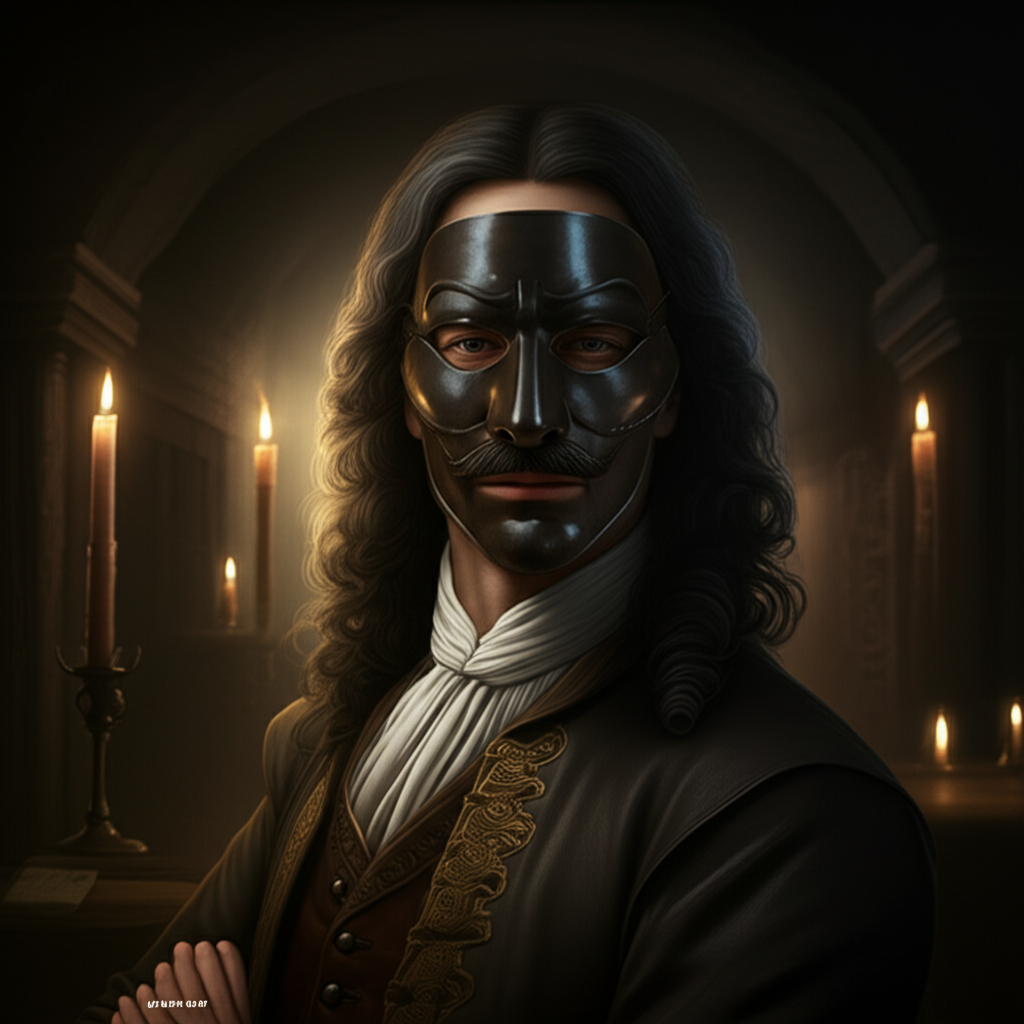
The identity of the Man in the Iron Mask remains one of the most enduring mysteries of the 17th-century French monarchy. This unidentified state prisoner, held in custody for over three decades under the reign of Louis XIV, was subjected to security measures of unparalleled severity. Under the watch of his jailer, Bénigne Dauvergne de Saint-Mars, the man was moved between several prisons, culminating in his death at the Bastille in 1703. His face was perpetually concealed, and he was forbidden from communicating with anyone but his guardian.
While popular legend, fueled by writers such as Voltaire, favored the theory of a secret twin brother to the king, historical analysis points toward a less dramatic but politically significant figure. The leading candidate among modern historians is Eustache Dauger, a man arrested in 1669 for reasons that remain obscure. Evidence suggests Dauger may have been a valet or official privy to sensitive state secrets, possibly concerning clandestine financial negotiations between Louis XIV and King Charles II of England.
The extraordinary secrecy surrounding the prisoner was therefore not a matter of hiding a royal lineage but a calculated strategy of information control. The goal was to completely isolate an individual who possessed knowledge that, if revealed, could have caused significant diplomatic or political damage to the French crown. The legend of the mask itself served as the ultimate tool of suppression, erasing the man’s identity to neutralize the power of the secrets he held.


