The construction of the Via Appia, initiated in 312 BCE under the censor Appius Claudius Caecus, represented a profound shift in Roman infrastructure strategy. Its primary military objective was to facilitate the rapid movement of legions and supplies southward, thereby securing Roman dominance during the Samnite Wars. The engineering philosophy behind its creation prioritized longevity and efficiency over expediency, establishing a new standard for road building that would define the Republic and later the Empire.
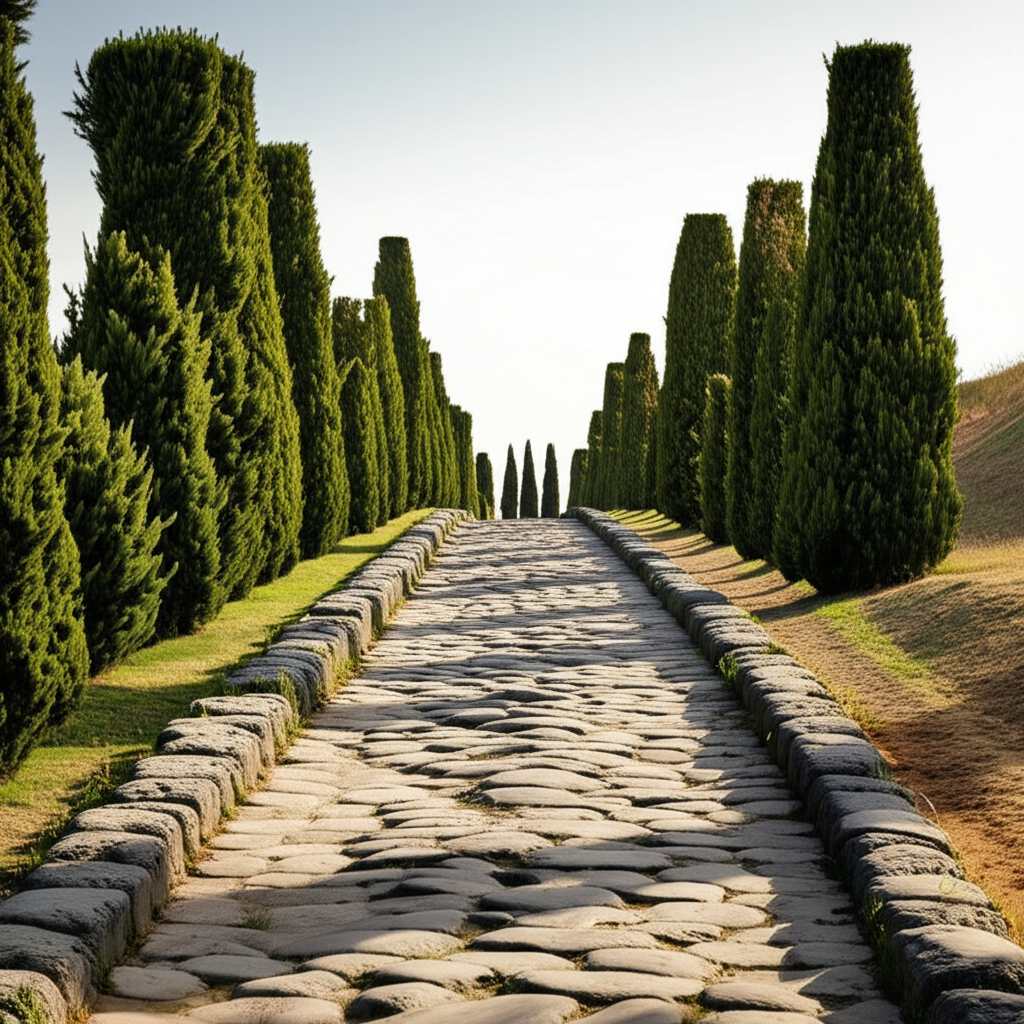
Roman engineers demonstrated a sophisticated understanding of materials science and logistics. The road’s foundation was a multi-layered system designed for unparalleled durability. After excavating a deep trench, workers laid a base of sand and small stones to ensure proper drainage. Upon this was set the statumen, a layer of large, flat stones bound by mortar to create a stable footing. Subsequent layers of gravel concrete (rudus) and cement (nucleus) were compacted before the final surface, the summum dorsum, was laid. This top layer consisted of massive, tightly fitted polygonal basalt blocks, crowned to effectively shed water into flanking ditches.
This meticulous construction resulted in an all-weather military highway of remarkable straightness, achieved through extensive surveying and formidable earthworks that cut through hills and filled valleys. The Via Appia was more than a conduit for travel; it was an enduring instrument of conquest, administration, and cultural projection, rightfully earning its ancient title, the “Queen of Roads.”