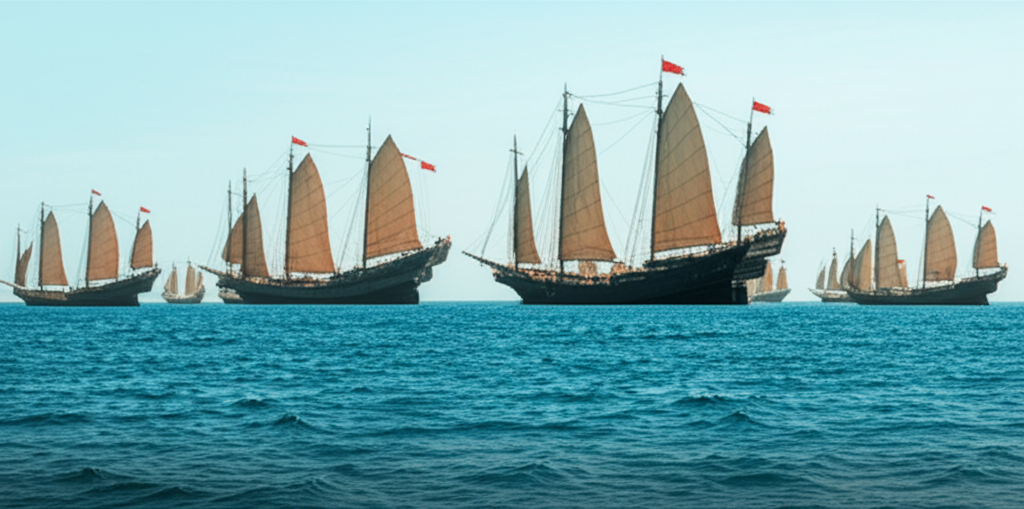
The expeditions of Zheng He during the early Ming Dynasty represented a masterful exercise in maritime statecraft. Under the directive of the Yongle Emperor, these seven voyages were not driven by a European-style impetus for territorial conquest or pure commerce. Instead, their primary strategic function was the projection of Chinese power and the revitalization of the traditional tributary system throughout the Indian Ocean basin. The immense scale of the treasure fleet, with its colossal flagships and vast support vessels, served as a powerful diplomatic tool, designed to impress foreign rulers and compel their acknowledgment of Ming preeminence.
The operational strategy of the fleet was a sophisticated blend of diplomacy and intimidation. Zheng He’s mandate was to establish formal relations, deliver imperial edicts, and escort foreign envoys back to the Ming court. While overwhelmingly peaceful, the fleet possessed significant military capability, which was decisively used on several occasions to suppress piracy or intervene in local conflicts that threatened Chinese interests and trade routes. This demonstrated that Ming authority was not merely ceremonial.
The abrupt cessation of the voyages after 1433 reflected a fundamental shift in imperial policy. Facing renewed threats along its northern land borders and influenced by a more conservative Confucian bureaucracy, the Ming court turned its focus inward. This strategic reorientation concluded China’s grand era of state-sponsored maritime exploration, leaving the vast naval infrastructure to decline and effectively ceding the Indian Ocean to emerging European powers in the subsequent century.