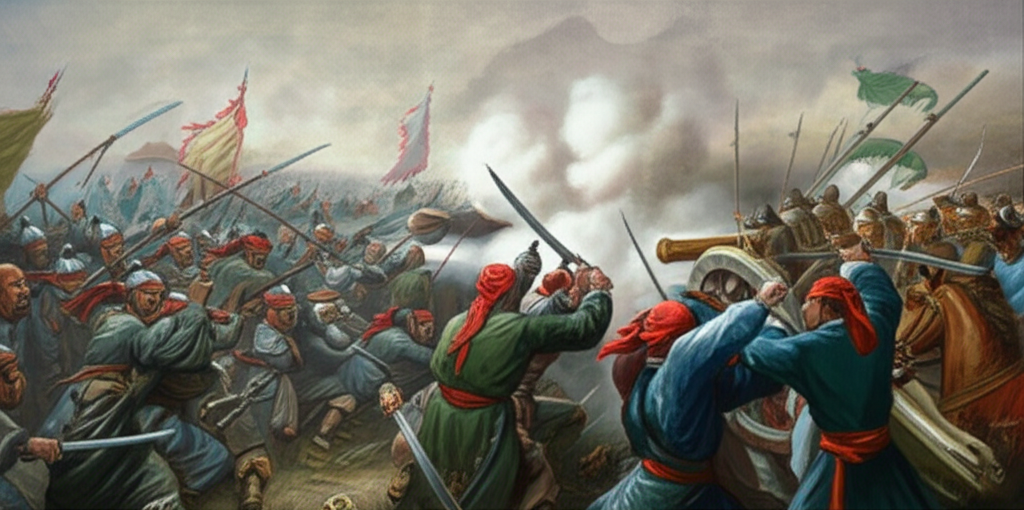
The Taiping Rebellion represented a profound strategic challenge to the Qing dynasty, not merely through its scale but through its initial military and administrative coherence. The early campaigns, characterized by disciplined, ideologically fervent armies, allowed for the rapid conquest of the Yangtze River valley and the establishment of a capital at Nanjing, renamed Tianjing. This success was predicated on a combination of popular support drawn from a discontented peasantry and a centralized command structure under Hong Xiuquan. In these formative years, the Taiping Heavenly Kingdom presented a viable, alternative state model that fundamentally threatened Qing legitimacy.
However, the rebellion’s strategic momentum faltered due to critical internal failures. Once established in their capital, the Taiping leadership grew insular, failing to capitalize on their victories by launching a decisive, coordinated assault on Beijing. The court became a center of political intrigue and excess, which culminated in the catastrophic Tianjing Incident of 1856. This bloody purge of key military and political leaders, including the brilliant general Yang Xiuqing, shattered the unity of the Taiping command and created an irrecoverable leadership vacuum.
This internal paralysis proved fatal. It arrested the Taiping military machine, providing the Qing court with the crucial time needed to regroup and implement new strategies. The imperial government increasingly relied on regional Han Chinese armies and enlisted the support of Western powers, whose military technology and organizational skills proved decisive. The rebellion, once a dynamic force poised to overthrow a dynasty, devolved into a protracted war of attrition. Its ultimate defeat was sealed not only on the battlefield but within the walls of its own capital, a consequence of strategic stagnation and self-inflicted political wounds.