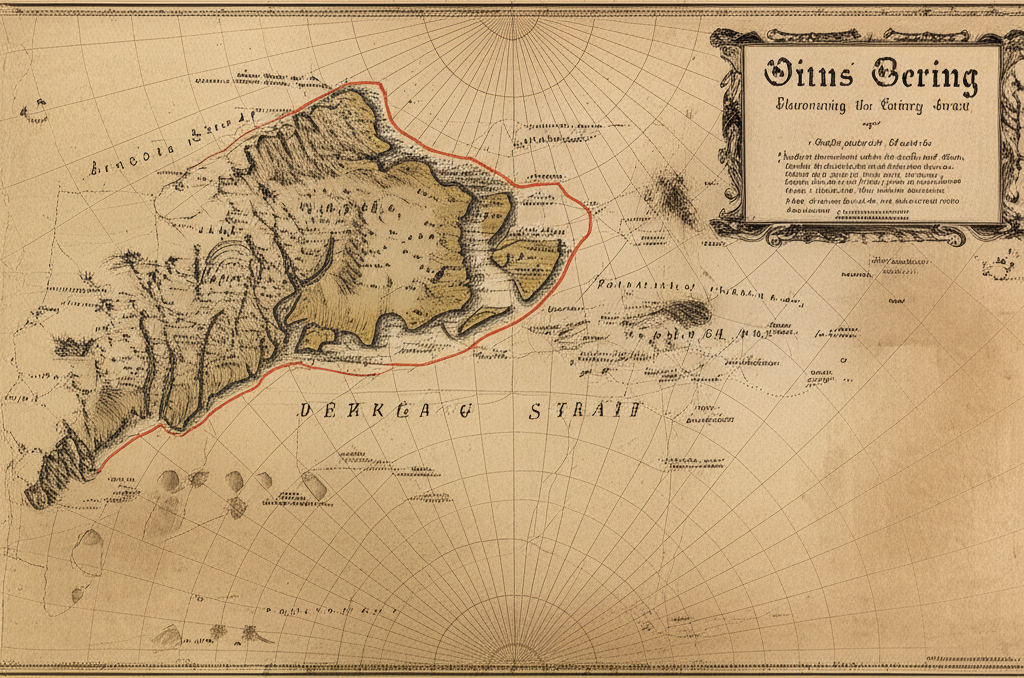
The First Kamchatka Expedition, commanded by the Danish navigator Vitus Bering in the service of the Russian Navy, was a masterful exercise in logistical planning and perseverance. Launched under the directive of Peter the Great, its primary objective was strategic: to determine conclusively whether a land bridge connected Asia and North America. Before any sea voyage could commence, Bering was tasked with the immense challenge of transporting personnel and vital shipbuilding materials across the vast, unforgiving expanse of Siberia to the Okhotsk coast, a journey that itself took two years.
In the summer of 1728, after constructing the vessel St. Gabriel, Bering sailed northward along the Siberian coast. He successfully navigated the waterway that would later bear his name, the Bering Strait, rounding the East Cape of Asia and venturing into the Chukchi Sea. By doing so, he effectively demonstrated that the two continents were not connected.
However, the expedition’s strategic success was tempered by a crucial limitation. Persistent fog and poor visibility prevented Bering from sighting the North American coastline, which lay just beyond the horizon. Upon his return to St. Petersburg, this lack of visual confirmation was met with skepticism by some in the Admiralty. While he had fulfilled the letter of his orders by sailing between the continents, the absence of a documented North American landfall rendered his findings incomplete in the eyes of his superiors and ultimately necessitated his far more ambitious Second Kamchatka Expedition.