The rise of the Vijayanagara Empire in the fourteenth century marked a decisive shift in the geopolitical landscape of the Deccan Plateau. Established as a bulwark against the southward expansion of the Bahmani Sultanate, the empire’s survival depended not merely on religious zeal but on calculated strategic depth. The fertile land between the Krishna and Tungabhadra rivers, known as the Raichur Doab, became the focal point of this centuries-long conflict. Control of this resource-rich territory was essential for maintaining economic stability and funding the vast military apparatus required to repel northern incursions.
Administrators recognized early that traditional warfare was insufficient against the heavy cavalry and mounted archers of the northern powers. Consequently, the state invested heavily in military modernization to close the tactical gap. This strategic overhaul included:
The aggressive importation of high-quality Arabian horses to bolster the mobility of the cavalry.
The integration of Turkish firearms and artillery experts to counter northern gunpowder superiority.
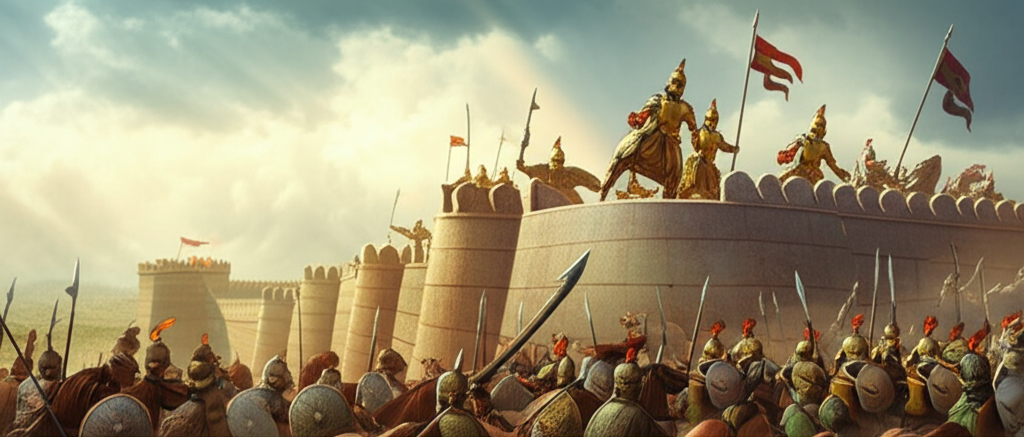
* The construction of massive concentric fortifications designed to withstand prolonged sieges and attrition warfare.
Diplomacy proved as potent as the sword, particularly during the de facto rule of Aliya Rama Raya. He skillfully exploited internal divisions among the splintered Deccan Sultanates, frequently allying with one faction to weaken another. This policy of active interference effectively prevented a unified northern front for decades. However, this delicate balance of power eventually collapsed, forcing the rival sultanates into an unprecedented coalition. While the disaster at the Battle of Talikota in 1565 eventually fractured the central authority, the empire’s prolonged resistance successfully insulated the southern peninsula from total annexation for over two centuries, preserving distinct regional administrative structures.