By the summer of 1905, the conflict in the Far East had reached a critical strategic impasse. Although the Empire of Japan had secured decisive naval and land victories, most notably at the Battle of Tsushima, the nation’s treasury was perilously close to exhaustion. Conversely, while the Russian Empire faced humiliating defeats and burgeoning domestic revolution, Tsar Nicholas II remained reluctant to capitulate, banking on Russia’s vast strategic depth and manpower to outlast its adversary. The subsequent negotiations, brokered by American President Theodore Roosevelt, represented a delicate balance between military reality and diplomatic necessity.
The conference held at the Portsmouth Naval Shipyard became a contest of attrition at the negotiating table. The talks stalled repeatedly over two contentious demands: Japan’s insistence on monetary reparations and the total cession of Sakhalin Island. The Russian envoy, Sergei Witte, executed a strategy of obstinance, refusing any indemnity that would imply total conquest. He correctly calculated that Japan could not afford to resume hostilities.
Japan’s Foreign Minister, Komura Jutaro, ultimately prioritized long-term geopolitical dominance over immediate financial restitution. In a calculated maneuver to secure peace before military advantages eroded, Tokyo accepted a compromise:
Japan acquired the southern half of Sakhalin.
Russia recognized Japan’s paramount interests in Korea.
* Control of the South Manchuria Railway and the Liaodong Peninsula was transferred to Japan.
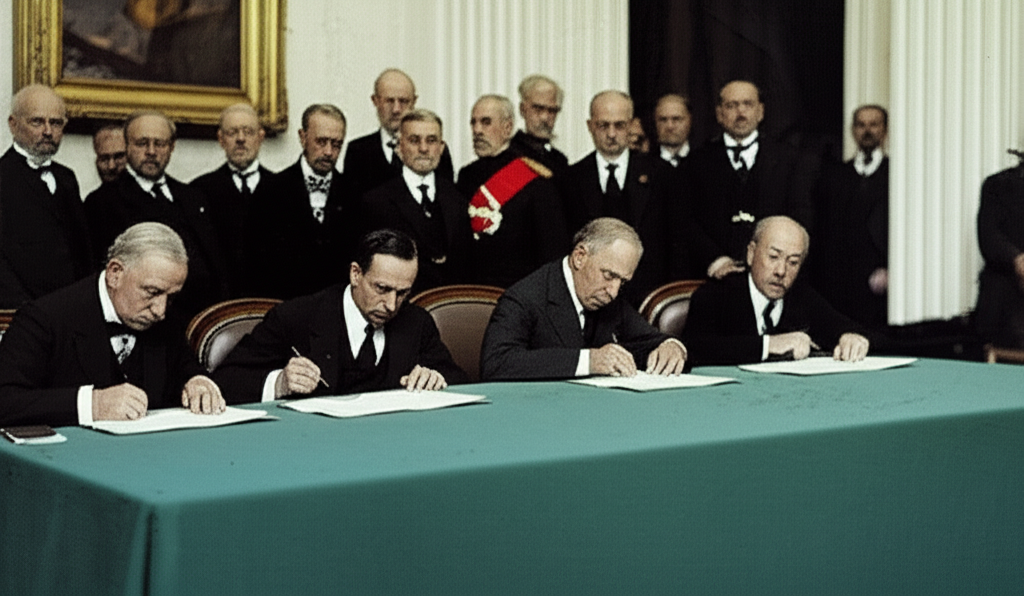
The resulting Treaty of Portsmouth, signed on September 5, 1905, formally concluded the war. While the Japanese public reacted with volatility regarding the lack of indemnity, the agreement strategically dismantled the myth of European invincibility. It marked the first instance in the modern era where an Asian nation compelled a European power to accept terms that fundamentally altered the global balance of power.