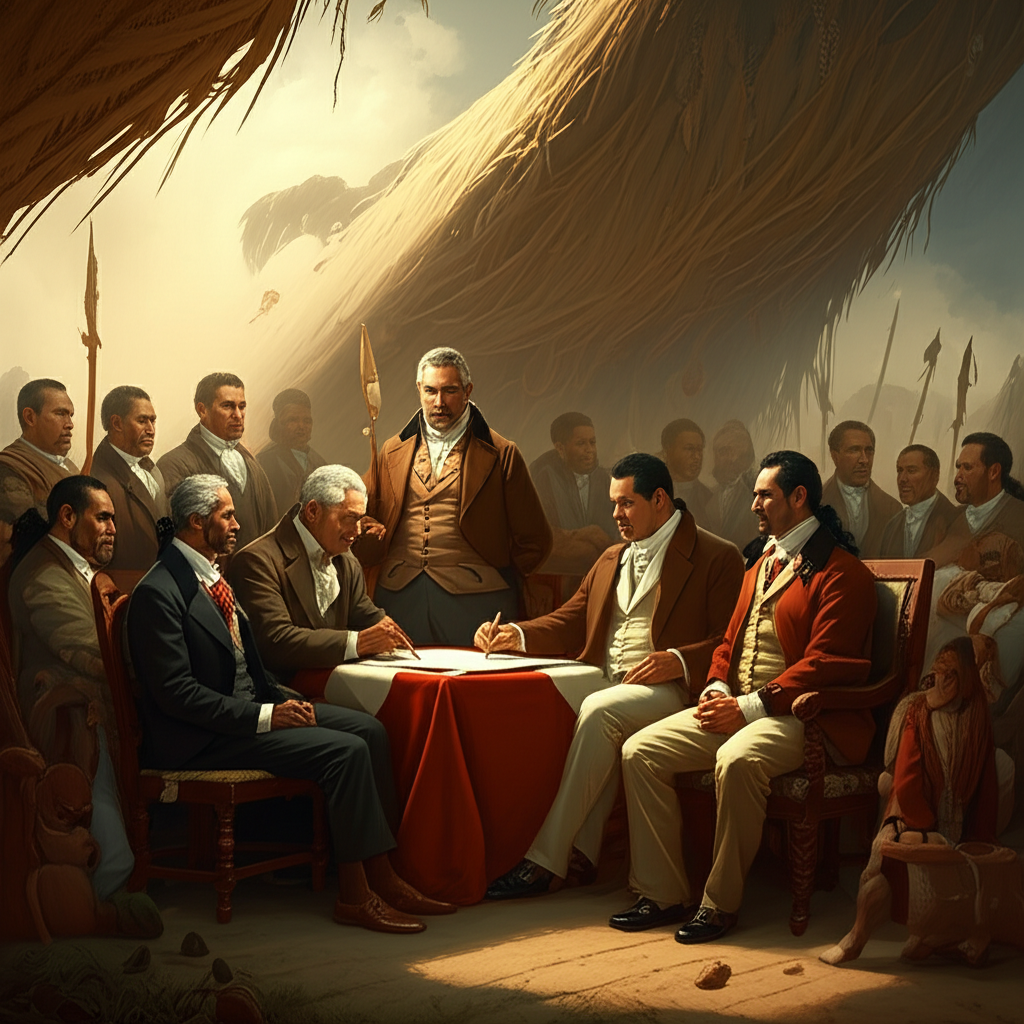
On February 6, 1840, the geopolitical landscape of the South Pacific shifted irrevocably with the signing of the Treaty of Waitangi. Lieutenant Governor William Hobson, acting under specific instructions from the Colonial Office, sought to formalize British influence to check French expansion and regulate the conduct of unruly settlers. The gathering at Waitangi represented a pivotal moment of diplomatic maneuvering, where the interests of the British Crown intersected with the strategic foresight of the Māori Rangatira.
The critical divergence lay within the translation and interpretation of the document itself. While the English text unequivocally ceded Sovereignty to Queen Victoria, the Māori text, drafted by the missionary Henry Williams, utilized the term Kawanatanga (governance). This linguistic choice was instrumental in securing the agreement of the chiefs, as it suggested the Crown would exercise a limited administrative power rather than absolute dominion. Consequently, the signatories believed they were retaining their Tino Rangatiratanga—their absolute chieftainship and authority over their lands and treasures—while entering a protective alliance to bolster their trade and security.
In the years following the ratification, the Crown proceeded based on the assumption of full sovereign control, leading to immediate constitutional friction. The Treaty served not as a simple instrument of cession, but as the foundational, if contested, compact of the new colony. The enduring legacy of 1840 lies in this dual understanding, where a strategic partnership was forged upon differing expectations of power and authority, establishing a complex framework for the nation’s historical trajectory.