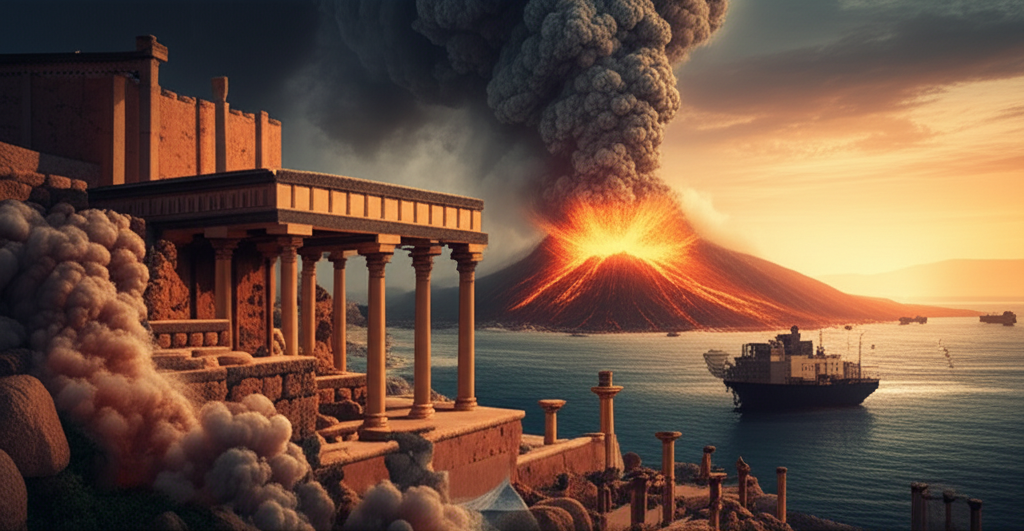
In the annals of the Late Bronze Age, few events altered the geopolitical landscape as drastically as the cataclysmic eruption on the island of Thera. This geological paroxysm did not merely reshape the physical topography of the Aegean; it dismantled the structural foundations of the Minoan civilization, precipitating a decline from which the culture never recovered.
The immediate devastation crippled the economic engines of Crete. Massive tsunamis, generated by the collapse of the volcanic caldera, battered the northern coastlines, obliterating the merchant fleets and naval harbors that ensured Minoan maritime dominance. Simultaneously, dense volcanic ash blanketed the region, causing significant agricultural failure. This environmental shock destabilized the delicate redistributive economy centered around the palaces, eroding the religious and political authority of the ruling elite.
Historical scrutiny reveals that the collapse was likely gradual rather than instantaneous. The eruption rendered the Minoans vulnerable, stripping them of their defensive capabilities and trade monopolies. This systemic weakness created a power vacuum eventually exploited by the Mycenaeans from mainland Greece. Archeological layers indicate that within a century of the disaster, mainland administrative practices and militaristic control had superseded Minoan autonomy, marking the definitive transfer of power in the ancient Mediterranean.