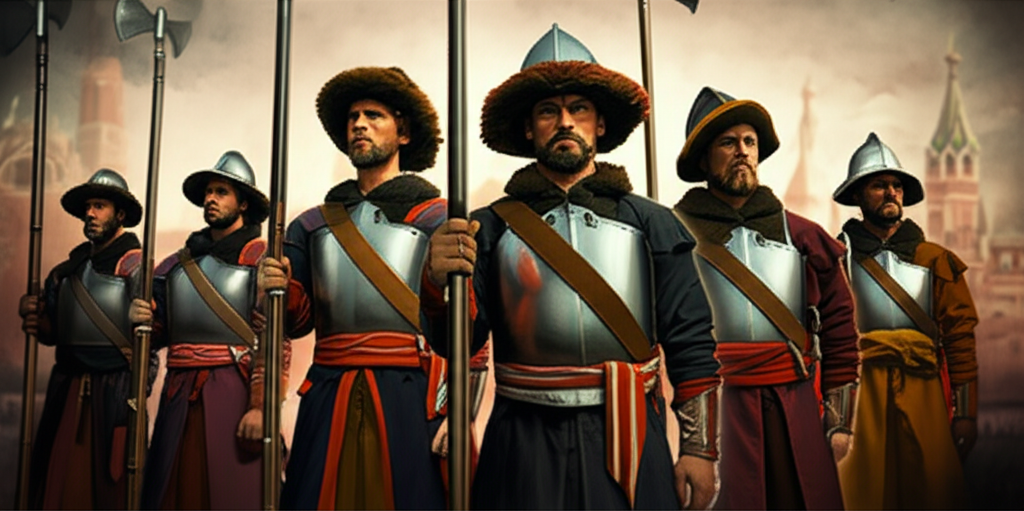
The establishment of the Streltsy by Ivan IV in 1550 marked a definitive pivot in Muscovite military doctrine. Moving away from the reliance on irregular feudal levies provided by the Boyars, the Tsar sought to centralize martial power through a permanent, uniformed corps dedicated to firearm warfare. This strategic reorganization provided the state with a reliable instrument for expansion, proving instrumental in the campaigns against the Khanates of Kazan and Astrakhan.
Tactically, the Streltsy functioned as heavy infantry, wielding the heavy arquebus and the bardiche, a crescent-shaped poleaxe utilized both as a lethal melee weapon and a stabilizer for their firearms. Their battlefield utility lay in the optimization of massed volley fire, a method that disrupted enemy cavalry charges before close-quarters combat ensued. They were particularly effective when deployed in conjunction with the Gulyay-gorod, a mobile wooden fortification system that allowed them to maintain sustained fire while shielded from opposing arrows and cavalry.
Unlike temporary levies, these troops were embedded within the social fabric, residing in specific districts known as slobodas. While this hereditary system initially ensured loyalty and unit cohesion, it eventually fostered a resistance to modernization. By the late 17th century, the corps had transformed from an elite combat unit into a reactionary political faction. This stagnation necessitated their eventual dissolution and brutal suppression by Peter the Great, who sought to replace the archaic Streltsy model with Western-style regiments capable of competing on the European stage.