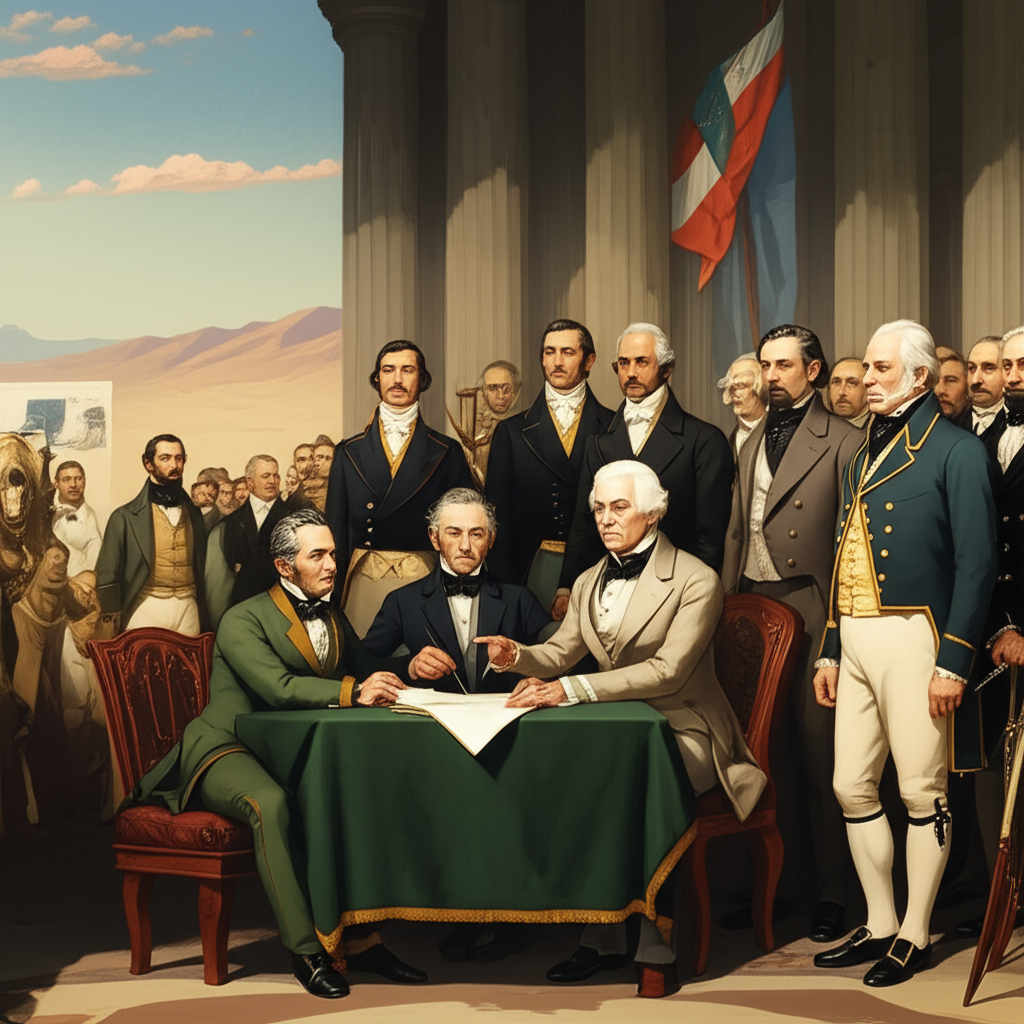
The ratification of the Treaty of Guadalupe Hidalgo on February 2, 1848, marked a definitive turning point in North American history, signaling the conclusion of the Mexican-American War and the fundamental reshaping of the continent’s geopolitical map. While ostensibly a diplomatic agreement to cease hostilities, the treaty functioned as the ultimate instrument of Manifest Destiny, transferring over half of Mexico’s territory to the United States and extending American sovereignty to the Pacific Ocean.
Through the acquisition of the Mexican Cession, the United States secured approximately 525,000 square miles of strategic territory, encompassing present-day California, Nevada, Utah, and significant portions of neighboring regions. This expansion was not merely about land mass; it provided critical access to Pacific ports, thereby opening lucrative trade routes with Asia and altering the nation’s economic trajectory. The establishment of the Rio Grande as the southern boundary of Texas further consolidated American control, resolving long-standing border disputes that had precipitated the conflict.
However, the strategic triumph masked a deepening domestic crisis. The absorption of these vast new lands reignited the dormant sectional conflict regarding the expansion of slavery. The political struggle to determine the status of the new territories disrupted the delicate balance of power in the Senate, effectively acting as a catalyst for the eventual American Civil War. Thus, the treaty stands as a paradox in American history: it represented the zenith of continental expansion while simultaneously sowing the seeds of the nation’s eventual fracture.