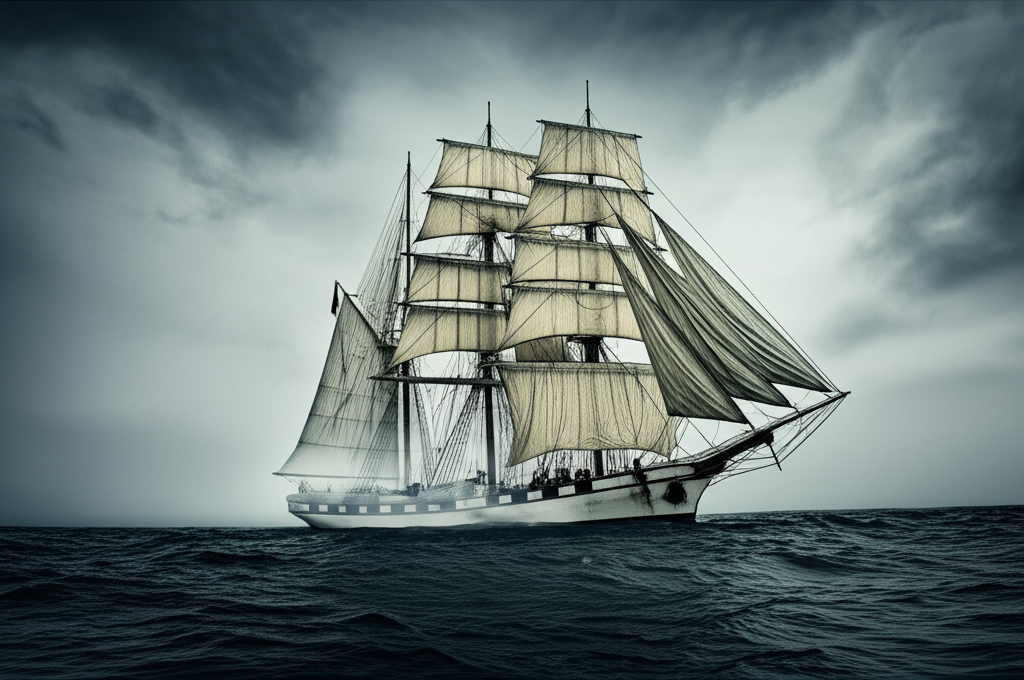
On January 31, 1921, the five-masted schooner Carroll A. Deering was discovered aground on the treacherous Diamond Shoals off Cape Hatteras, North Carolina. To the initial observers, the vessel appeared structurally intact, with sails set in a manner that suggested competent handling shortly before the incident. However, the subsequent investigation revealed a complete absence of the crew, transforming a maritime accident into one of the century’s most perplexing naval enigmas.
Upon boarding the derelict ship, salvage crews noted that the abandonment appeared to be a calculated, strategic withdrawal rather than a chaotic flight. The galley contained food prepared for a meal, indicating that the crew’s routine was interrupted abruptly. More critically, the ship’s navigational equipment, chronometer, and logbooks were missing. This specific removal of sensitive data suggests a deliberate attempt to obscure the events leading to the grounding, rather than a panicked reaction to natural disaster.
Historical analysis favors the theory of a command structure breakdown. Reports from the ship’s previous port of call in Barbados documented severe friction between Captain W.B. Wormell and his first mate, Charles McLellan. The objective evidence points toward a mutiny, likely fueled by the captain’s reported illness and the mate’s hostility. The damaged steering gear, found lashed in place, further supports the narrative of a struggle for control or a mechanical failure that precipitated a loss of discipline.
Despite an extensive inquiry involving multiple government agencies, no trace of the crew was ever found. The incident underscores the fragility of maritime authority during the Prohibition era, where internal discord proved as dangerous as the sea itself.