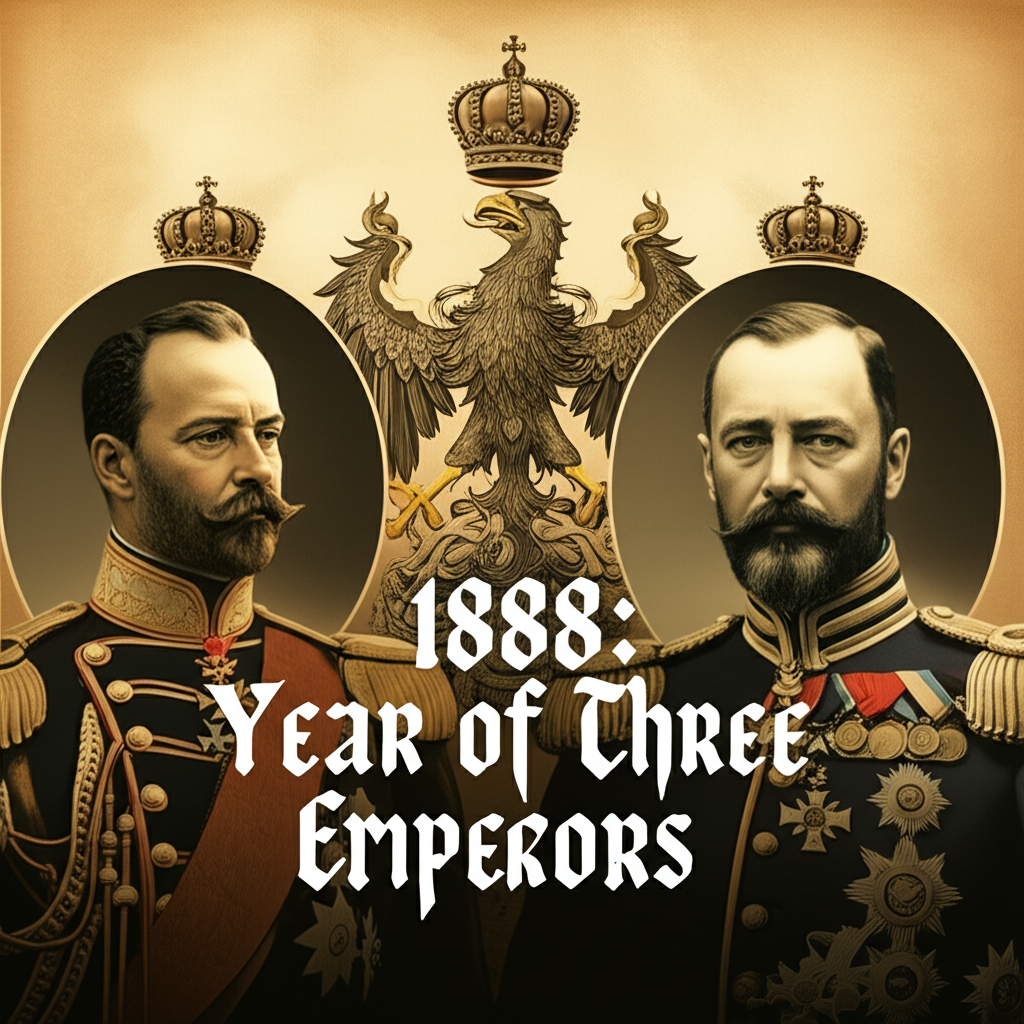
The year 1888 is recorded in the annals of European history as the Year of the Three Emperors, a tumultuous period that fundamentally altered the trajectory of the German Empire. The year commenced under the rule of the ninety-year-old Wilhelm I, the revered symbol of Prussian unification. His death in March created a vacuum of authority, destabilizing the diplomatic architecture carefully maintained by Chancellor Otto von Bismarck. The stability of the Reich relied heavily on the predictability of the monarch, and the ensuing dynastic crisis threatened to unravel the conservative fabric of the state.
The crown subsequently passed to Friedrich III, a figure upon whom progressives had placed immense hope for a transition toward British-style constitutionalism. However, political strategy was rendered ineffective by the Emperor’s failing health. Already suffering from terminal laryngeal cancer upon his accession, Friedrich reigned for a mere ninety-nine days. His inability to speak, forcing him to communicate through written notes, served as a grim metaphor for the silencing of liberal ambitions within Germany. Consequently, this brief interregnum offered no opportunity to dismantle the entrenched military and bureaucratic structures established by his predecessor.
In June, the succession fell to the twenty-nine-year-old Wilhelm II. This final transition marked the definitive strategic pivot of the era. Unlike his father, the young Kaiser harbored an aggressive vision of personal rule that conflicted directly with Bismarck’s cautious Realpolitik. The rapid turnover of monarchs in 1888 stripped the empire of its seasoned continuity, replacing steady stewardship with erratic dynamism. Ultimately, this dynastic turbulence accelerated Germany’s departure from defensive consolidation, setting the stage for the expansionist policies that would define the Wilhelmine era.