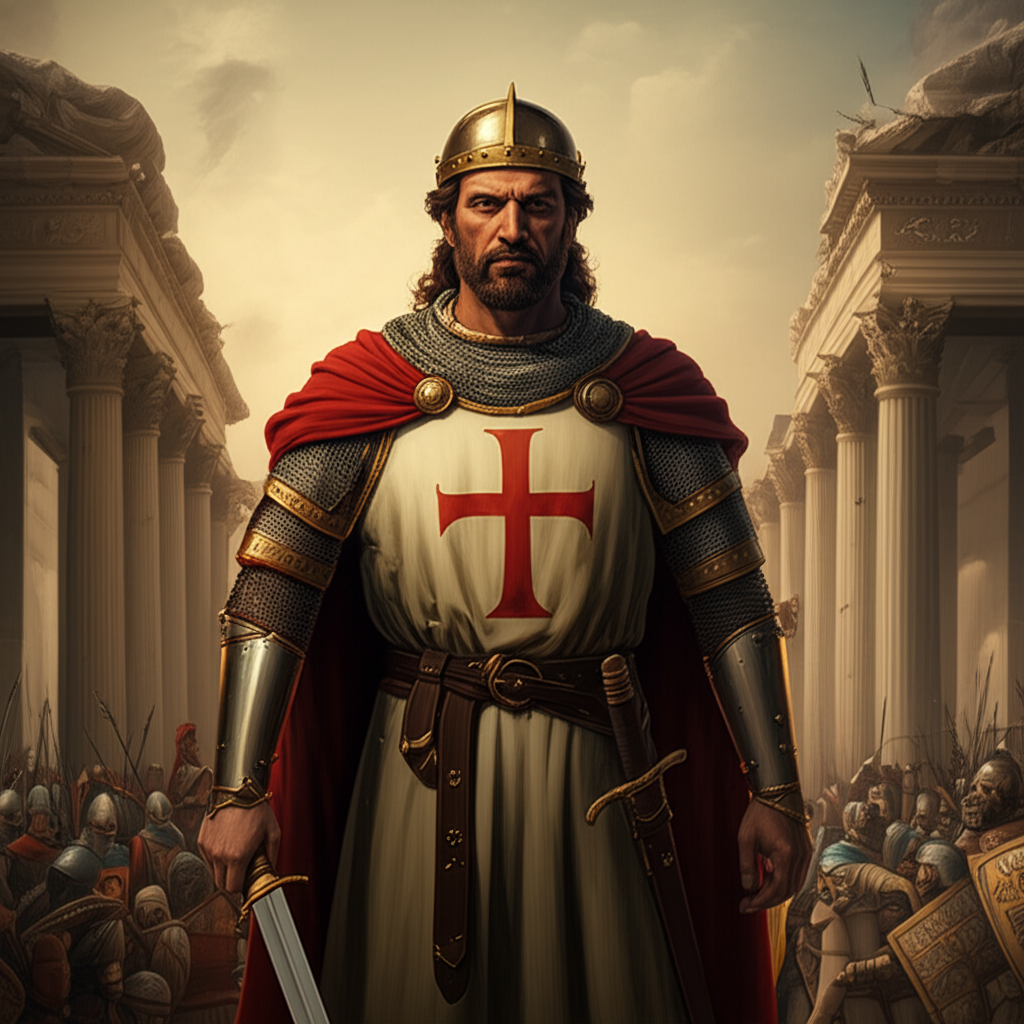
The aftermath of the Fourth Crusade redefined the geopolitical landscape of the eastern Mediterranean. Upon the sack of Constantinople in 1204, the victorious western leadership moved to dismantle the centuries-old Byzantine administrative apparatus. In its place rose the Latin Empire, a feudal construct that attempted to graft western hierarchy onto a complex Greek bureaucracy. This strategic transition was codified in the Partitio Romaniae, a treaty that prioritized Venetian commercial dominance over territorial stability.
However, the new regime suffered from inherent strategic flaws. The Crusaders controlled the capital, yet they lacked the manpower to secure the provinces. This power vacuum allowed for the rapid consolidation of Greek resistance, most notably in the Empire of Nicaea and the Despotate of Epirus. While the Latin emperors struggled with constant financial insolvency and reliance on Venetian naval power, the Nicene leadership focused on diplomatic isolation of the Latins and gradual military encroachment.
The failure of the Latin Empire was not merely military but administrative. The conquerors alienated the local population through religious subordination and heavy taxation, ensuring that their rule remained an occupation rather than a governance. By the time Constantinople was reclaimed by Greek forces in 1261, the experiment had irreparably fractured the unity of Christendom, leaving the region vulnerable to future Ottoman expansion.