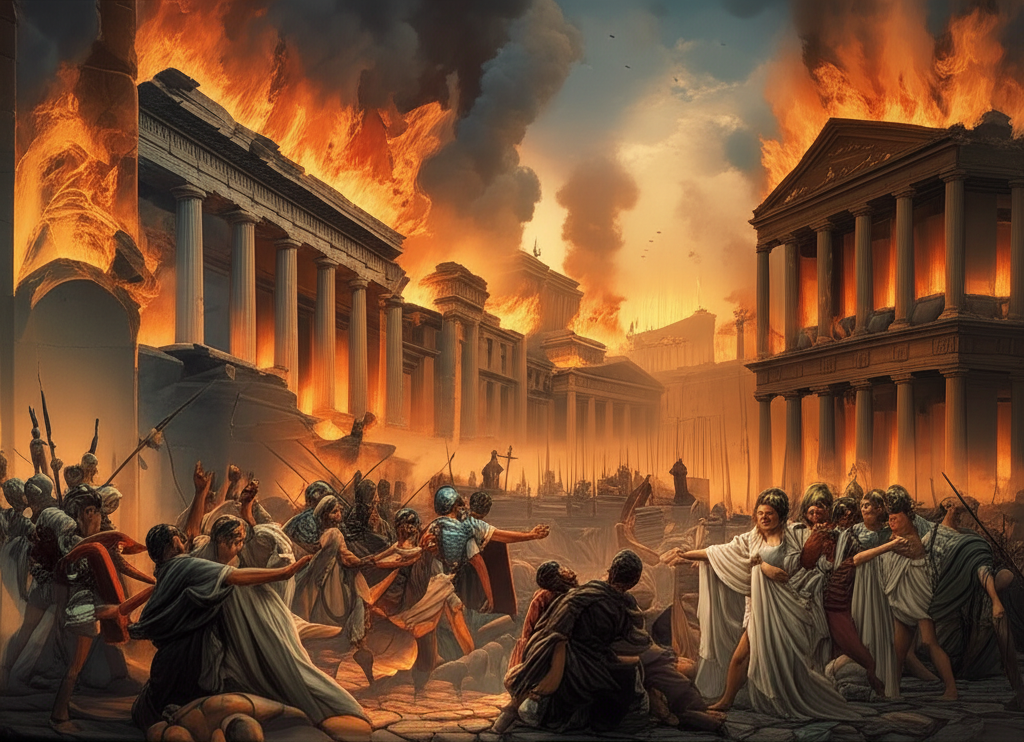
In July of AD 64, the imperial capital was engulfed by a catastrophic inferno that devastated ten of its fourteen districts. The Great Fire of Rome presented an immediate existential threat not only to the city’s infrastructure but to the stability of the Julio-Claudian dynasty. Historical accounts indicate that public sentiment rapidly turned against Emperor Nero, fuelled by persistent rumors that he had orchestrated the blaze to bypass the Senate and redesign the city to his architectural specifications. Facing a volatile populace and potential insurrection, the Emperor required a diversionary tactic to preserve his administration.
To deflect these dangerous accusations, the imperial regime identified a convenient target: the Christians. This distinct religious minority, already viewed with suspicion due to their private gatherings and refusal to participate in the Imperial Cult, offered an ideal scapegoat. The strategy employed was one of ruthless political optimization; by framing the disaster as the result of subversive malice rather than imperial negligence, Nero transformed a governance failure into a purge of perceived enemies. This maneuver allowed the state to channel public rage away from the Palatine Hill and toward a marginalized group.
The ensuing persecution was characterized by its theatrical brutality. The Roman historian Tacitus recorded that the executions were designed as gruesome spectacles in the imperial gardens, serving as grim entertainment for the masses rather than simple judicial punishment. While intended to solidify Nero’s authority, these actions inadvertently hardened the resolve of the early church. This event marked a significant turning point in Roman-Christian relations, establishing a legal and social precedent for state-sanctioned suppression that would shape the empire’s policies for centuries.