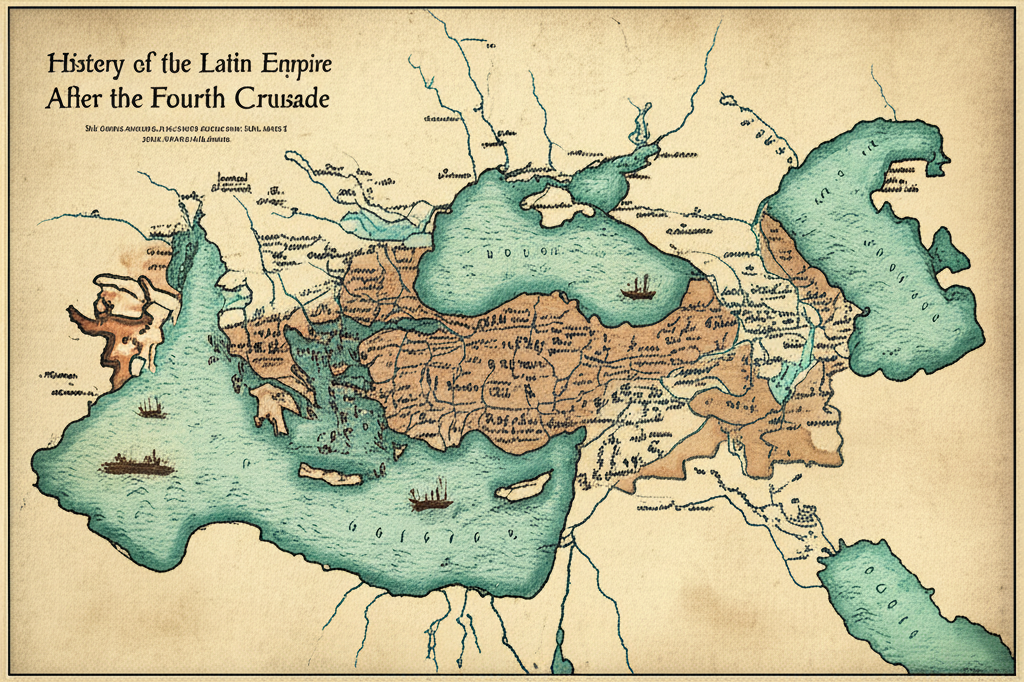
The establishment of the Latin Empire following the sack of Constantinople in 1204 represented a radical attempt to graft Western feudal structures onto the fractured remnants of Byzantium. Through the Partitio Romaniae, the crusaders sought to secure their hold over the region by distributing territories among Venetian merchants and Frankish knights. However, this strategic partition immediately sowed the seeds of instability. The fragmentation of authority prevented the consolidation of resources necessary to govern a hostile Greek populace and defend against encircling enemies.
Militarily, the regime suffered from a chronic lack of manpower. Baldwin I, the first Latin Emperor, attempted to enforce authority through aggression but met disaster at the Battle of Adrianople in 1205. This defeat at the hands of the Bulgarian Tsar Kaloyan exposed the frailty of the Frankish heavy cavalry when pitted against mobile forces in unfavorable terrain. Furthermore, the Latin leadership failed to neutralize the Byzantine successor states, specifically the Empire of Nicaea and the Despotate of Epirus, which organized effective resistance and slowly reclaimed lost territory.
By the reign of Baldwin II, the empire had devolved into a destitue state reliant on foreign charity. The strategic reliance on Venetian naval superiority proved insufficient against the diplomatic maneuvering of the Nicaean Emperor Michael VIII Palaiologos. Depleted of wealth and lacking a viable defense strategy, Constantinople fell in 1261 with minimal resistance. The Latin Empire’s collapse ultimately illustrated the futility of maintaining a colonial regime without indigenous support or sustainable supply lines.