
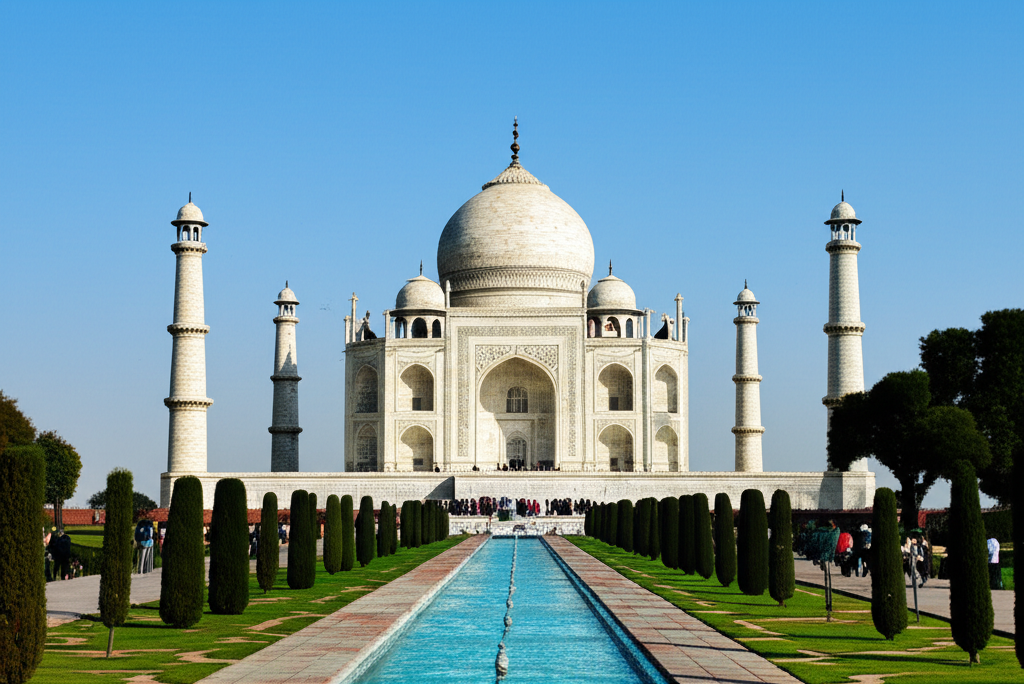
The construction of the Taj Mahal, commissioned by the Mughal emperor Shah Jahan in 1632, represents a pinnacle of architectural synthesis and strategic design. While popularly understood as a mausoleum for his beloved wife, Mumtaz Mahal, the complex was a meticulously planned imperial statement, blending Persian, Islamic, and Indian architectural traditions into a singular, cohesive vision. The selection of pure white Makrana marble was a deliberate choice, not merely for its aesthetic qualities, but for its dynamic interaction with ambient light, allowing the monument’s appearance to shift dramatically from dawn to dusk, symbolizing the ephemeral nature of earthly beauty.
A critical element of its design lies in the sophisticated use of optical illusions and structural foresight. The main gateway frames the mausoleum, making it appear immense and close; as one approaches, it seems to recede, a calculated effect intended to evoke a sense of reverence in the observer. Furthermore, the four minarets that flank the tomb were engineered to lean slightly outwards. This subtle but crucial design ensures that in the event of a seismic event, they would collapse away from the central dome, preserving its integrity. The integration of the charbagh garden and the Yamuna River was not incidental; it was fundamental to the theological narrative of the complex, symbolizing the gardens of Paradise. The entire composition was thus an exercise in architectural optimization, where every element served both an aesthetic and a symbolic purpose, solidifying the emperor’s legacy.


