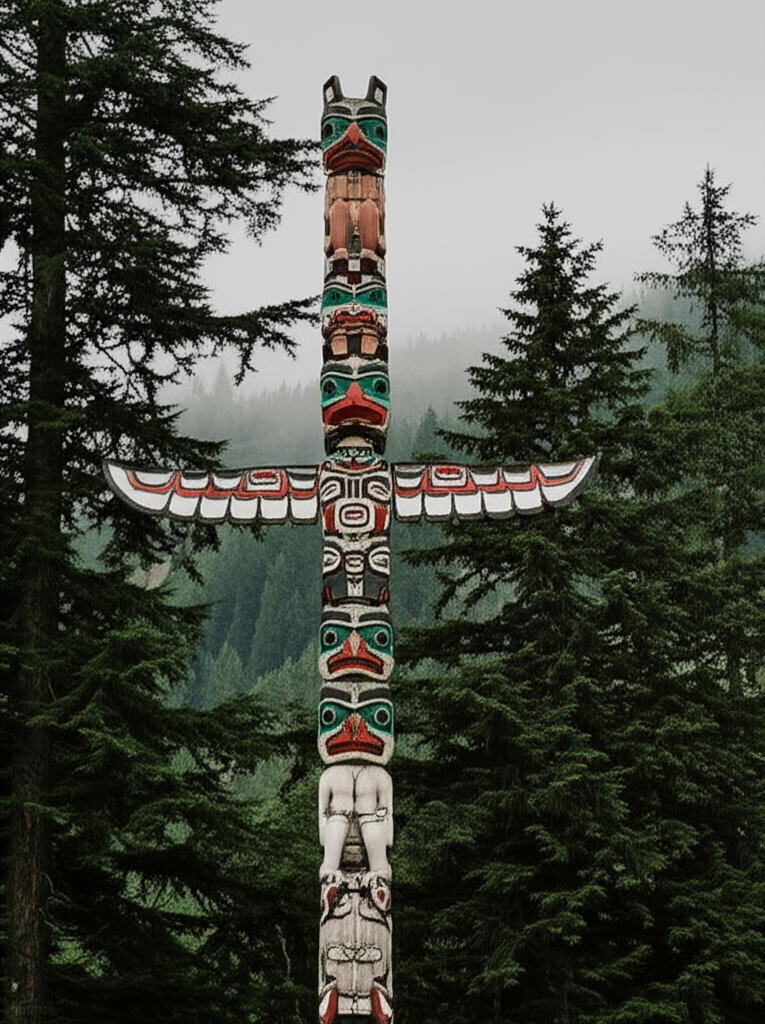
The monumental totem poles of the Pacific Northwest coast represent a sophisticated system of cultural and political communication, far exceeding their common perception as mere decorative art. These carvings functioned as intricate public documents, articulating the legal, social, and spiritual narratives of the Indigenous peoples who raised them. They were, in essence, a non-literate society’s most profound form of historical and legal record-keeping.
Each pole was a carefully constructed testament to a lineage’s history, rights, and privileges. The figures carved upon them were not deities but primarily crests—heraldic symbols representing a family’s inherited ancestral stories, encounters with supernatural beings, and claims to specific territories, fishing sites, or ceremonial names. The sequence and arrangement of these crests formed a visual codification of a clan’s identity and legal standing within the community, readable to all who understood the established iconography.
The raising of a totem pole was inextricably linked to the socio-economic institution of the potlatch. This ceremonial feast and distribution of wealth served as the public forum where the pole’s claims were validated. By hosting a potlatch, a chief or high-ranking family formally announced and legitimized the histories and prerogatives depicted on the pole before witnesses. Specific poles, such as memorial poles, honored the deceased, while the rare shame pole publicly admonished individuals for unpaid debts or transgressions. Consequently, totem poles were not static objects but dynamic instruments of governance and social order, solidifying a complex system of inherited rights that structured life along the coast.