The Geopolitical Ambitions of 1919
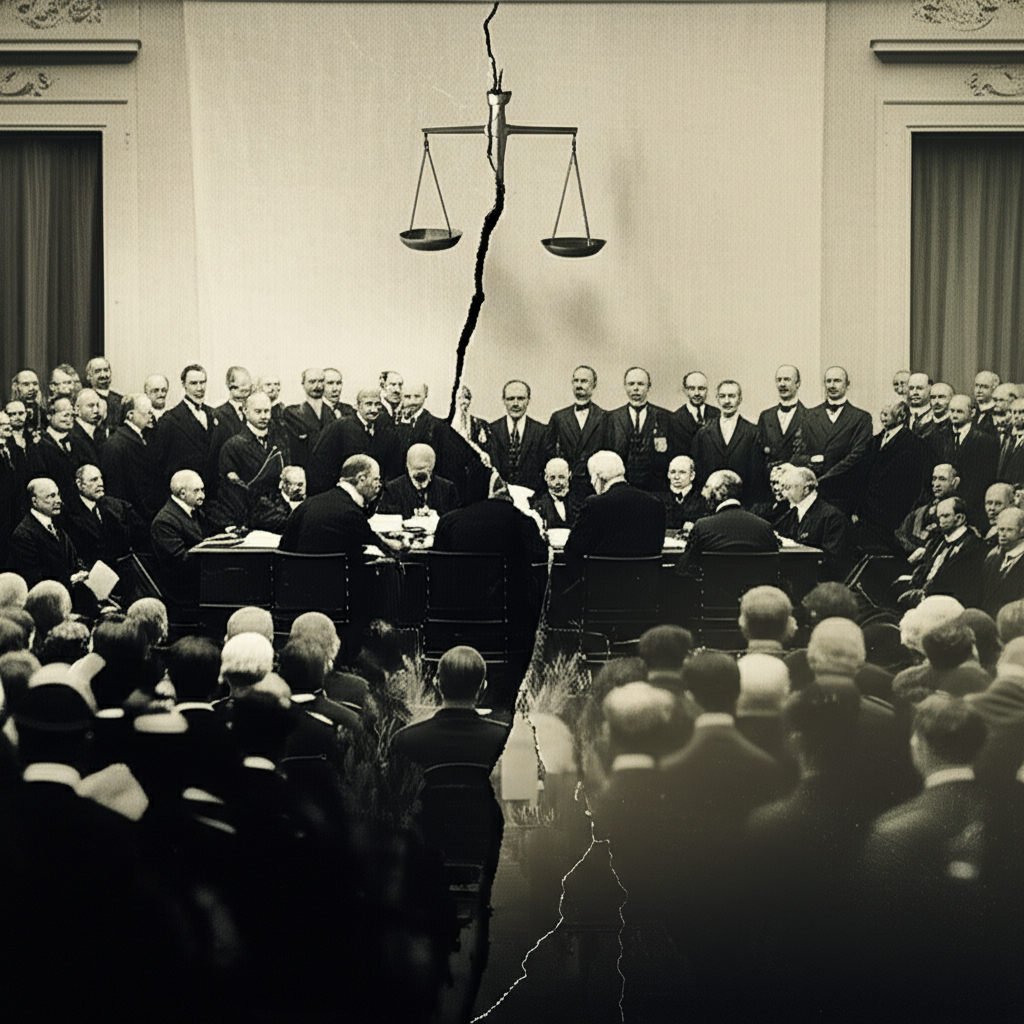
The conclusion of the Great War brought the Allied powers to the Paris Peace Conference, where they attempted to reconstruct the fractured geopolitical landscape of Europe. The resulting agreement represented a complex, often contradictory, effort to balance the idealism of international cooperation with the hard pragmatism of national security. Central to this new order was the establishment of the League of Nations, a visionary body intended to arbitrate global disputes and prevent the recurrence of total war through the mechanism of collective security.
Strategic Compromises and Economic Flaws
However, the strategic architecture of the settlement was fundamentally compromised by the conflicting objectives of the Big Four. While French leadership demanded the complete economic and military neutralization of their eastern neighbor to ensure future safety, British and American delegates favored a more moderate approach to maintain a continental balance of power. The final document satisfied neither objective fully.
Instead, the treaty imposed punitive measures, most notably the controversial War Guilt Clause (Article 231) and a crippling schedule of Reparations. These mandates served to humiliate the Weimar Republic and destabilize its economy without effectively dismantling German industrial potential. This economic burden fostered a deep national resentment that would eventually be exploited by radical political movements.
The Failure of Enforcement
Ultimately, the agreement created a dangerous strategic vacuum. By isolating the new Soviet government and failing to secure the ratification of the United States, the enforcement mechanisms of the peace were rendered toothless from the outset. Historians observe that the settlement suffered from a fatal paradox: it was neither lenient enough to appease the defeated nations nor harsh enough to permanently incapacitate them. Consequently, the treaty functioned less as a foundation for lasting stability and more as a prelude to the renewed hostilities that would engulf the continent two decades later.