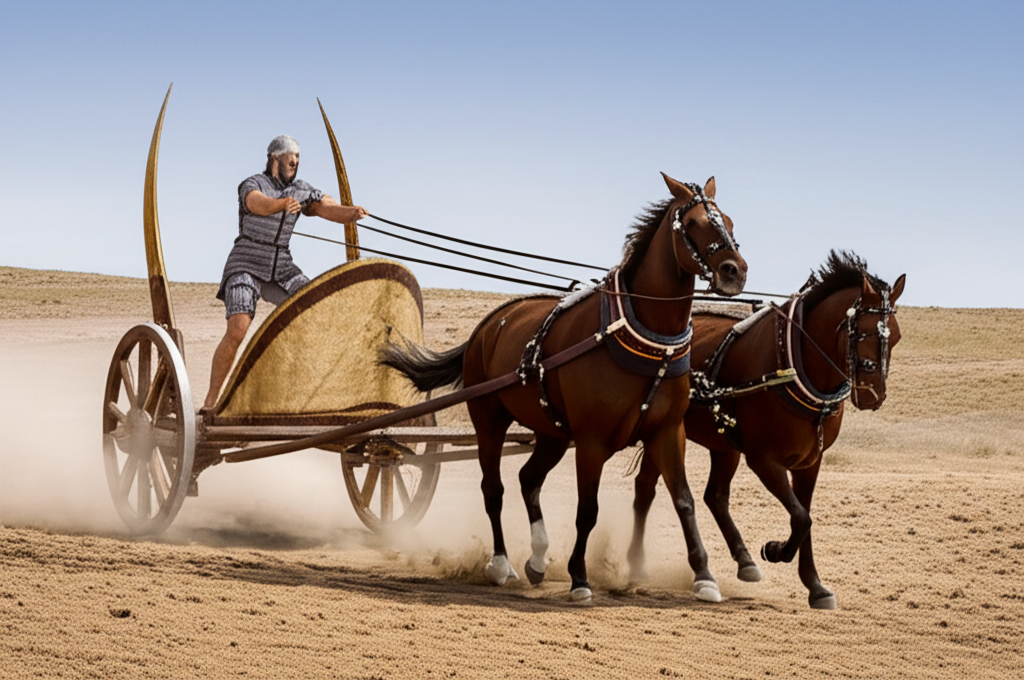
The scythed chariot emerged as a formidable instrument of terror in ancient warfare, designed not merely for combat but for the catastrophic disruption of enemy morale and cohesion. Its principal architects, notably the Achaemenid Persians, employed these vehicles to shatter the disciplined resolve of dense infantry formations, turning order into chaos.
The strategic value of the chariot lay in its capacity as a psychological weapon. The sight of heavy frames pulled by powerful horses, with sharpened blades extending from the axles, was intended to induce panic long before impact. The primary objective was to break an enemy line before direct contact, forcing soldiers to scatter and rendering them vulnerable to the cavalry and infantry who followed. This tactic was particularly aimed at formations like the Greek phalanx, whose entire strength depended upon its tight, unbroken structure.
Despite its fearsome reputation, the scythed chariot possessed significant tactical vulnerabilities. Its effectiveness was contingent upon flat, open terrain and was largely negated by disciplined troops. Commanders such as Alexander the Great devised effective countermeasures, instructing infantry to open their ranks at the last moment. This created channels through which the chariots passed harmlessly, allowing the isolated drivers to be dispatched. This adaptation demonstrated that while the chariot was a potent tool against wavering forces, its utility as a decisive battlefield weapon was ultimately situational and limited.