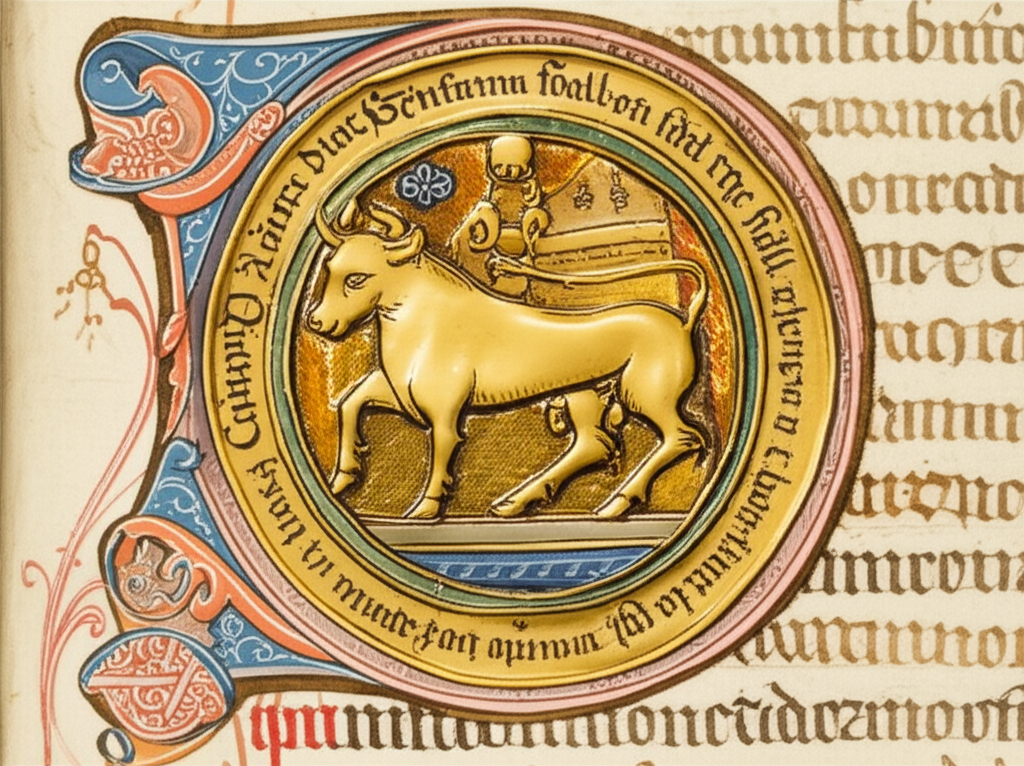
The Golden Bull of 1356, promulgated by Emperor Charles IV, represented a monumental act of constitutional engineering within the Holy Roman Empire. Its primary strategic objective was not to innovate, but to codify and thereby stabilize the tumultuous process of imperial succession. For centuries, disputed elections and papal intervention had created profound political instability. This edict was designed to create a clear, legally binding framework that would eliminate these sources of conflict and secure the electoral process from external manipulation.
The document’s central provision was the definitive establishment of the seven prince-electors—three ecclesiastical and four secular—as the sole body responsible for selecting the King of the Romans. By granting these princes specific rights, including indivisible territories and precedence over all other imperial nobility, Charles IV effectively ended the chaotic “double elections” that had previously paralyzed the realm. More significantly, the Bull made no mention of papal confirmation, a deliberate and powerful assertion of the Empire’s secular authority over its own internal governance.
While the Golden Bull succeeded in optimizing electoral procedure and reducing civil strife, its long-term consequence was the formal entrenchment of a decentralized political structure. By cementing the power of a select group of territorial magnates, the edict ensured that the Holy Roman Empire would not develop into a centralized monarchy akin to France or England. Instead, it solidified the Empire’s character as an aristocratic federation, a political reality that would define its existence until its dissolution in 1806. It stands as a masterclass in pragmatic statecraft, achieving immediate stability at the cost of future centralization.