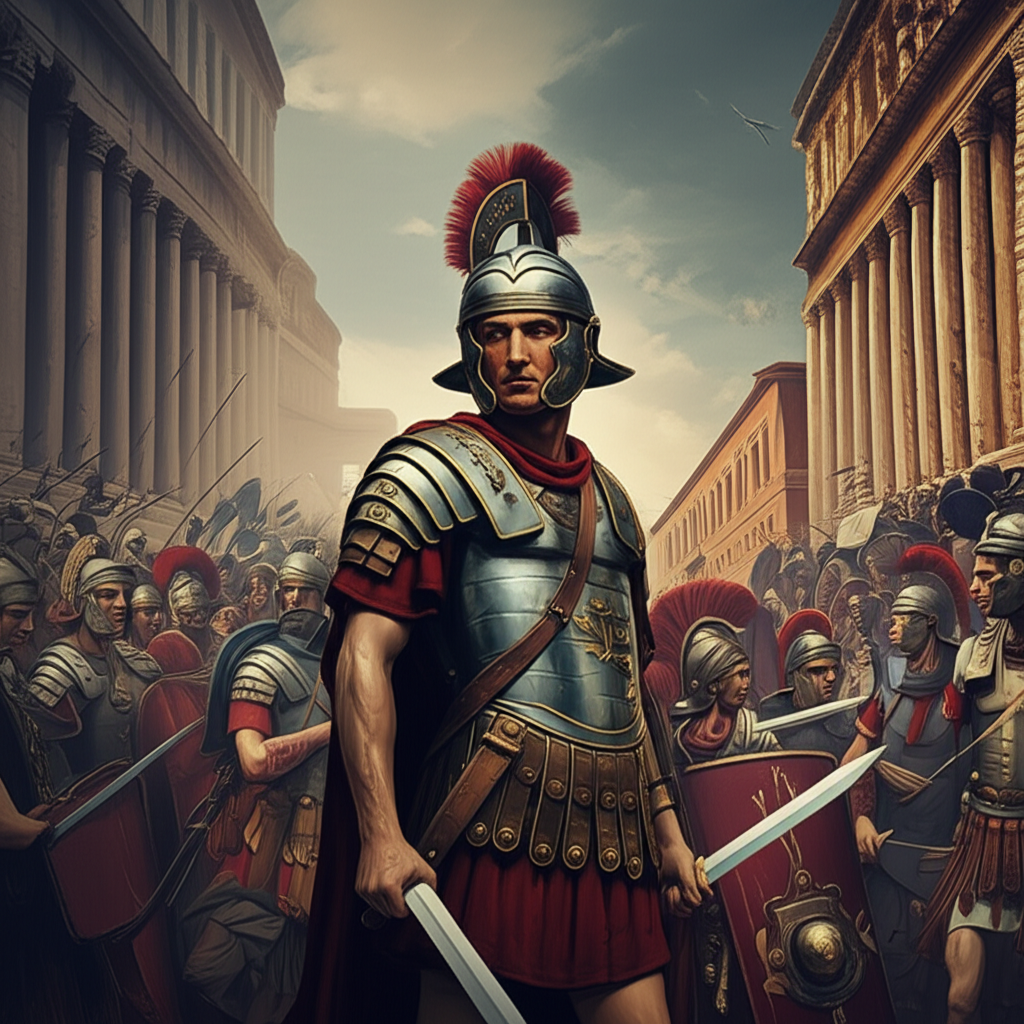
The tumultuous period known as the Year of the Four Emperors fundamentally altered the political calculus of the Roman state. Following the collapse of the Julio-Claudian dynasty with Nero’s demise, the ensuing power struggle revealed with stark clarity that the ultimate source of imperial authority was no longer the Senate in Rome, but the provincial legions stationed across the empire.
The rapid succession of rulers—Galba, Otho, and Vitellius—was dictated not by patrician consensus but by military acclamation and the outcome of civil war. Each claimant rose to power on the strength of the armies that proclaimed him, only to be supplanted when a rival commander mobilized a more formidable or strategically positioned force. The Praetorian Guard’s role in the accession of Otho demonstrated the importance of controlling the capital, but Vitellius’s victory proved the superior might of the frontier armies.
The ultimate triumph of Vespasian, backed by the powerful eastern and Danubian legions, cemented this new reality. His victory was not merely a personal one; it was a definitive statement that the emperor could be made far from Rome. This paradigm shift exposed the fiction of the Augustan settlement and established military backing as the indispensable prerequisite for imperial rule, a precedent that would profoundly influence Roman politics for centuries to come.