The success of the Nabataean kingdom was fundamentally linked to its sophisticated mastery of hydraulic engineering. Rather than merely sourcing water, their strategy centered on the comprehensive management of scarce precipitation across a vast and arid landscape. The system was a meticulously planned network designed for maximum efficiency in water collection, conveyance, and storage.
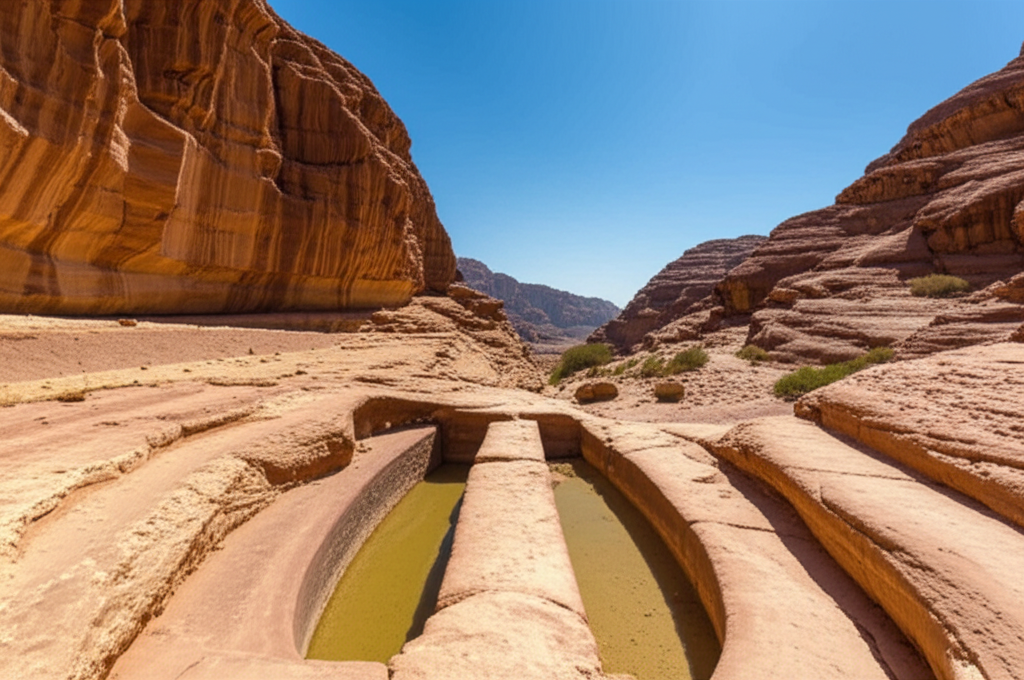
At the core of this strategy was runoff harvesting. Nabataean engineers carved intricate channels and conduits directly into the sandstone cliffs to intercept and divert flash floodwaters. This captured water was not wasted but meticulously directed into vast, rock-hewn cisterns, often plastered for waterproofing, which served as reservoirs for the dry seasons. This approach allowed them to capture nearly every drop of rain that fell in their territory.
In urban centers like Petra, this system reached its zenith. Terracotta pipelines, engineered with precise gradients, created a pressurized water supply that fed public fountains, supported terraced agriculture, and sustained a large population. This integrated infrastructure was the bedrock of Nabataean economic and political power, transforming inhospitable desert terrain into a thriving commercial hub and demonstrating a profound understanding of hydrological principles.