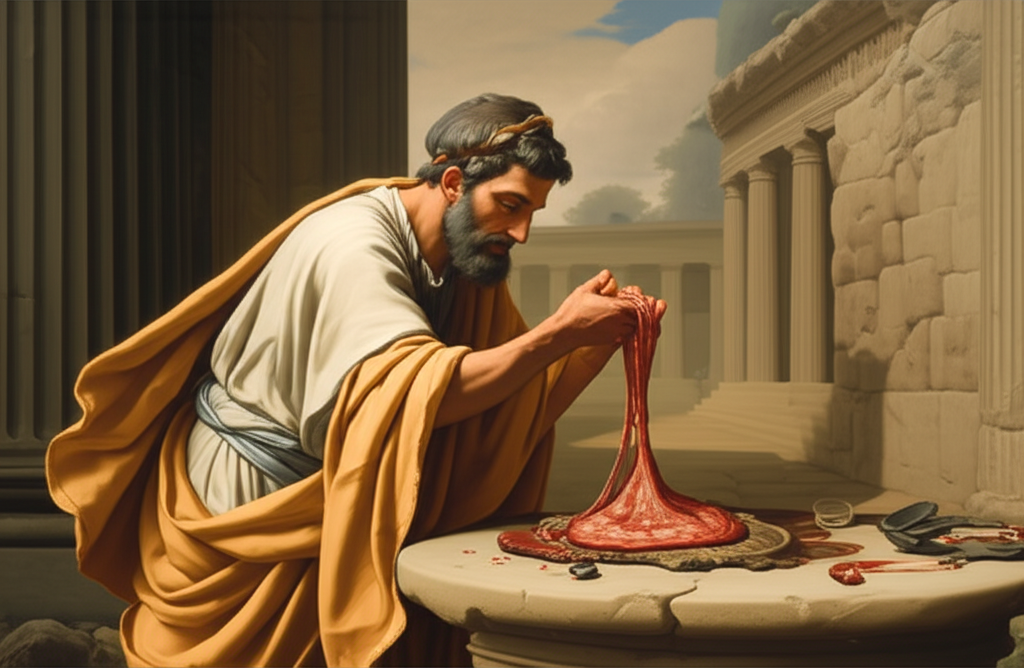
The Roman Republic did not view divination as mere superstition, but as a rigid technology of statecraft. The Haruspices, originally of Etruscan descent, served as essential technical advisors to the Senate and magistrates. Unlike the Augurs, who observed avian signs to validate elections or laws, the Haruspices specialized in the detailed inspection of entrails to determine divine assent before major military campaigns or civic crises. Their expertise was crucial for maintaining the peace between Rome and its gods, functioning as a bureaucratic safeguard against catastrophe.
The central method employed was extispicy, the examination of a sacrificed animal’s internal organs. This process was not random; it followed a highly optimized, anatomical map known to practitioners through discipline and study. The liver, regarded as the seat of life, was divided into distinct regions corresponding to various deities and earthly sectors.
A deformation in the “friendly” section often signaled internal domestic strife.
Anomalies in the “hostile” section typically predicted threats from foreign enemies.
This codified system allowed the practitioner to cross-reference physical data against established theological precedents, reducing ambiguity in the divine will.
Strategically, the Haruspices functioned as a check on executive power. A general could not legitimately march to war if the exta—the vital organs—were deemed unfavorable. Consequently, the interpretation of omens became a subtle tool of political maneuvering. While ostensibly objective, the reading of the entrails often mirrored the anxieties or ambitions of the ruling class. The durability of Rome’s institutions relied heavily on this formalized dialogue with the divine, ensuring that human action always appeared aligned with cosmic order.