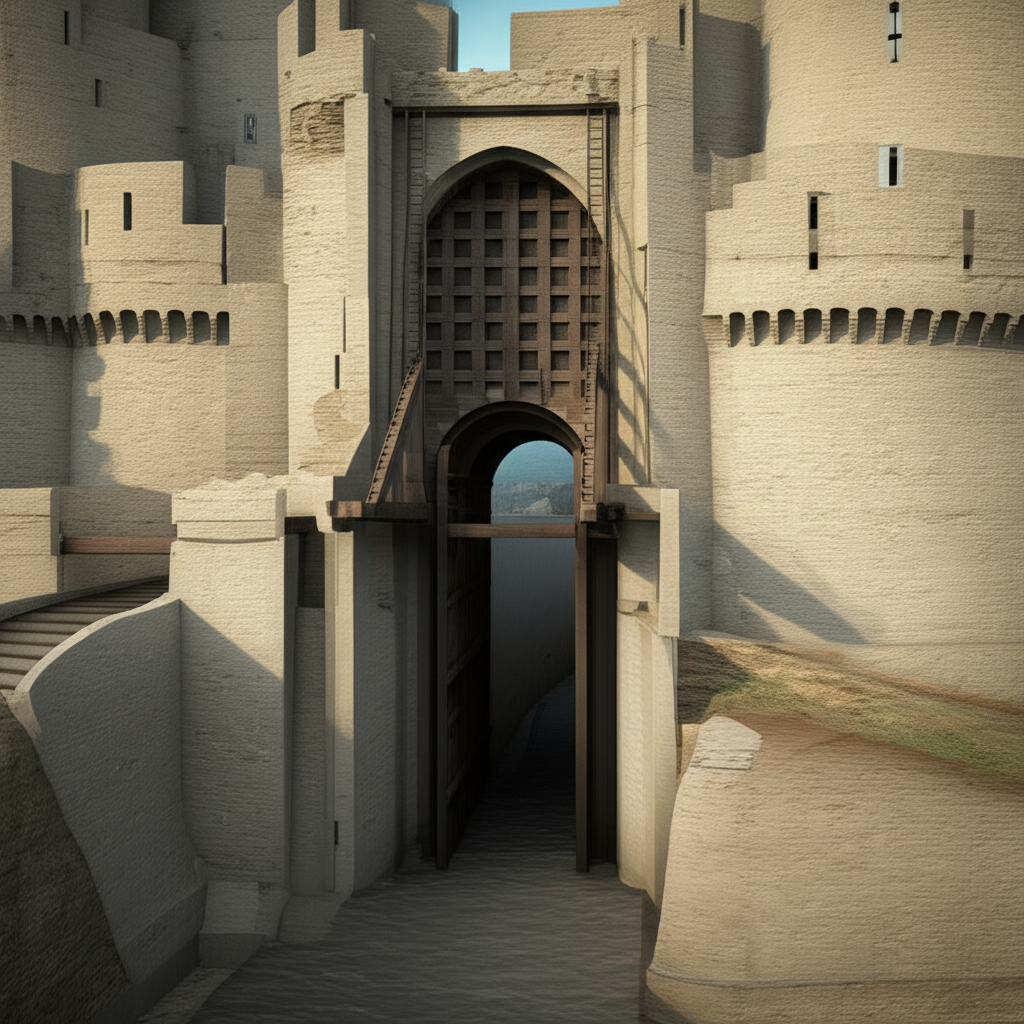
In the evolution of medieval fortification, the integration of the Pont du Milieu represented a critical advancement in defensive spatial planning. Rather than serving as a mere transitional causeway, this middle bridge functioned as a deliberate chokepoint designed to fracture enemy momentum. Military architects positioned these structures to connect the outer bailey with the inner ward, forcing besieging forces into a highly controlled, exposed corridor. The engineering capitalized on elevation and isolation, ensuring that any breach of the curtain wall did not immediately compromise the primary stronghold.
The structural composition of the bridge optimized both durability and tactical utility. Stone piers supported the central span, while the terminal section frequently incorporated a drawbridge mechanism operated from a heavily fortified gatehouse. This dual-material construction allowed defenders to sever the internal connection rapidly during a protracted siege. Furthermore, the alignment of the bridge was rarely direct. Architects intentionally angled the approach to expose the unshielded right flank of advancing hostile forces to enfilading fire from adjacent flanking towers.
Strategically, this engineering feature facilitated a phased, organized withdrawal for the defending garrison. By segmenting the castle into distinct, isolated defensive zones, commanders could systematically abandon compromised sectors without risking a total rout. The middle bridge transformed the internal dry moat into a lethal perimeter, dictating the pace of the assault and limiting the sheer numbers an attacking force could deploy at once. Ultimately, the design of these internal crossings demonstrated a profound understanding of spatial attrition, solidifying their role as an indispensable asset in the defensive warfare of the era.